

| Márcio Hiroaki Kume*, Edson Peracchi, Mônica Andréa Probst, Bianca Furlan, Camila Gobatto Boaventura, Carmen Austrália Paredes Marcondes Ribas |
| Corresponding Author: Márcio Hiroaki Kume, 80250-190, Iguassu Avenue, 1236, Brazil. |
| Received: October 19, 2026; Revised: October 22, 2026; Accepted: October 23, 2026 Available Online: October 24, 2026 |
| DOI: doi.org/10.5281/zenodo.23764914 |
| Citation: Kume MH, Peracchi E, Probst MA, Furlan B, Boaventura CG, et al. (2026) Protecting Muscle, Bone and the Stem-Cell Niche During GLP-1-Based Weight Loss: A Translational Review of Sarcopenia Risk, Common Adverse Effects and the SHIELD Mitigation Framework. Stem Cell Res Ther, 9(1): 264-275. |
| Copyrights: ©2026 Kume MH, Peracchi E, Probst MA, Furlan B, Boaventura CG, et al. This is an open-access article distributed under the terms of the Creative Commons Attribution License, which permits unrestricted use, distribution, and reproduction in any medium, provided the original author and source are credited. |
| Share : |
44
Views & Citations10
Likes & Shares
Conclusions: Lean loss during incretin therapy is real but heterogeneous, and its functional meaning depends on baseline muscle reserve, age, treatment duration and weight-cycling. We propose SHIELD (Screen, High-quality protein, Integrated training, Evaluate function, Limit collateral harms, Durable maintenance), a conceptual, non-validated framework that shifts monitoring from body weight to muscle function. Prospective studies with functional end points, direct muscle-mass measures and stem-cell biomarkers are needed.
Keywords: GLP-1 receptor agonists; sarcopenia; sarcopenic obesity; satellite cells; mesenchymal stem cells; resistance training
Abbreviations: ALM, appendicular lean mass; BIA, bioelectrical impedance analysis; BMD, bone mineral density; DXA, dual-energy X-ray absorptiometry; GI, gastrointestinal; GIP, glucose-dependent insulinotropic polypeptide; GLP-1, glucagon-like peptide-1; GLP-1RA, glucagon-like peptide-1 receptor agonist; MRI, magnetic resonance imaging; MSC, mesenchymal stem/stromal cell; NAION, non-arteritic anterior ischemic optic neuropathy; RCT, randomized controlled trial.
The magnitude and speed of weight loss create a problem that body weight alone cannot detect. Any substantial energy deficit removes lean tissue as well as fat, and the clinical relevance of that loss has become a matter of debate [3,4].
For a middle-aged adult with high muscle reserve, losing several kilograms of lean mass may be a proportional adaptation to a smaller body. For an older adult, a person with low baseline strength, or someone who later stops treatment and regains mainly fat, the same loss may represent the first step toward sarcopenia, that is, low muscle strength combined with low muscle quantity or quality [5], or toward sarcopenic obesity [6]. Concern has been expressed that fat-free mass measured by dual-energy X-ray absorptiometry (DXA) does not equal skeletal muscle mass, and that older adults may be the group in whom loss matters most [7].
This review has three aims. First, to summarize, with attention to effect sizes and measurement methods, what is known about lean, muscle and bone changes during GLP-1 receptor agonist (GLP-1RA) therapy, and about the most common non-muscle adverse effects. Second, to bring a stem-cell perspective to the problem, examining what experimental work suggests about satellite cells, myostatin signaling and mesenchymal stem/stromal cells (MSCs). Third, to translate the evidence into a practical, explicitly provisional framework for preventing and managing lean loss and other common adverse effects. Throughout, we distinguish biological plausibility, clinical signals and regulatory approval, because these are frequently conflated in this rapidly growing field.
METHODS
This is a structured narrative review, not a systematic review or meta-analysis, and no new patient data were collected. We searched PubMed, PubMed Central, publisher websites and regulatory agency websites up to October 2026 using combinations of the terms GLP-1 receptor agonist, semaglutide, liraglutide, tirzepatide, lean mass, fat-free mass, skeletal muscle, sarcopenia, sarcopenic obesity, bone mineral density, adverse events, gallbladder, pancreatitis, alopecia, weight regain, resistance training, protein, creatine, myostatin, activin, bimagrumab, apitegromab, enobosarm, satellite cell and mesenchymal stem cell.
We prioritized (i) randomized controlled trials (RCTs) and their prespecified body-composition substudies; (ii) systematic reviews and meta-analyses; (iii) regulatory assessments and multisociety guidance; and (iv) mechanistic studies in animal models and human cells relevant to muscle and stem-cell biology. Company press releases were included only when no peer-reviewed report was available and are labeled as such. Bibliographic details of all references were checked against Crossref records. Evidence was graded qualitatively as high (consistent RCT or meta-analytic data), moderate (single RCTs, substudies or large observational cohorts), low (small trials, pharmacovigilance or surrogate end points) or preclinical. The SHIELD framework and the weight-cycling scenario presented in this article are original syntheses by the author and have not been tested prospectively.
BODY COMPOSITION DURING INCRETIN THERAPY
How much of the weight lost is lean tissue?
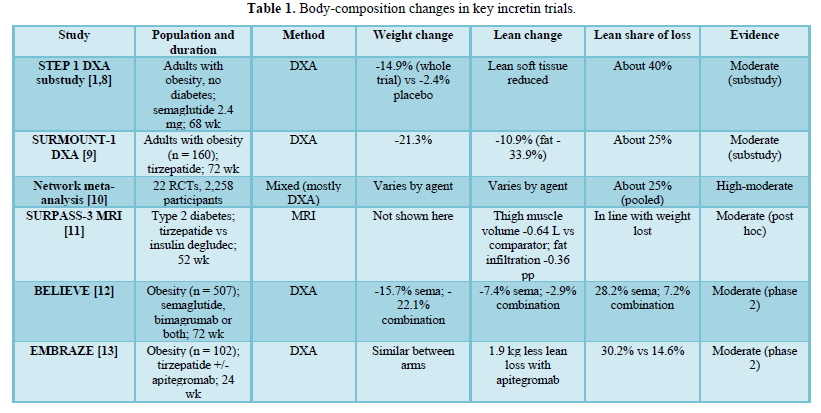
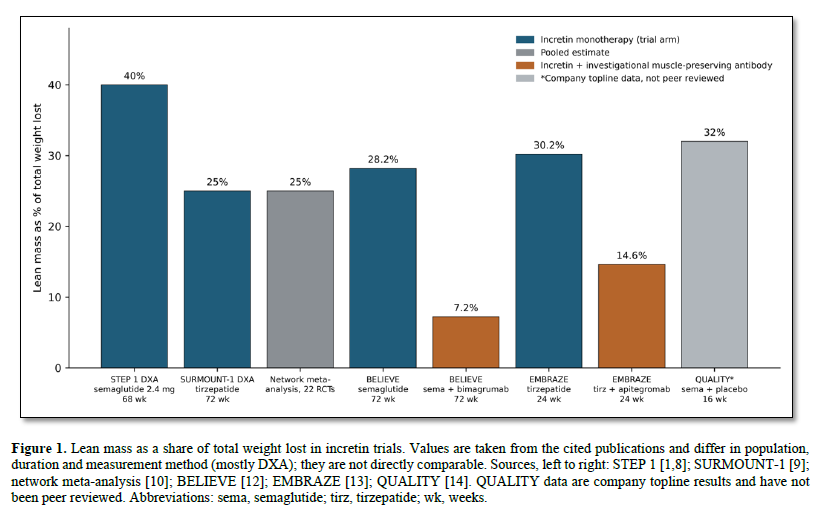
Body-composition substudies give a consistent but heterogeneous picture (Table 1; Figure 1). In the STEP 1 DXA substudy, about 40% of the weight lost with semaglutide was lean soft tissue [1,8]. In the SURMOUNT-1 DXA substudy (n = 160), tirzepatide reduced total body weight by 21.3%, fat mass by 33.9% and lean mass by 10.9%, so that roughly three-quarters of the weight lost was fat and one quarter lean [9].
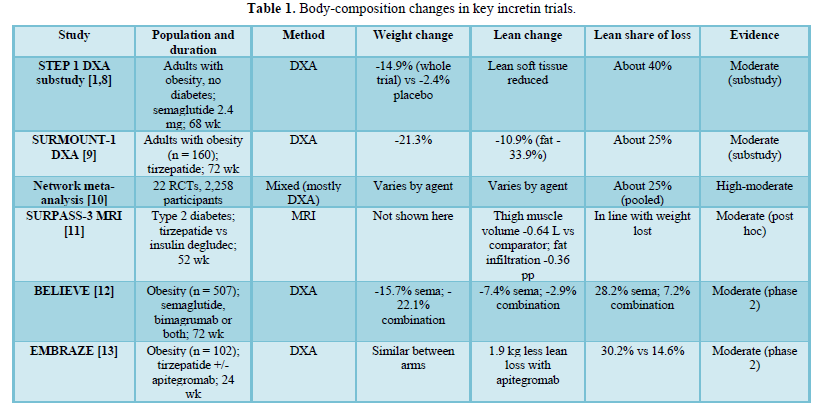
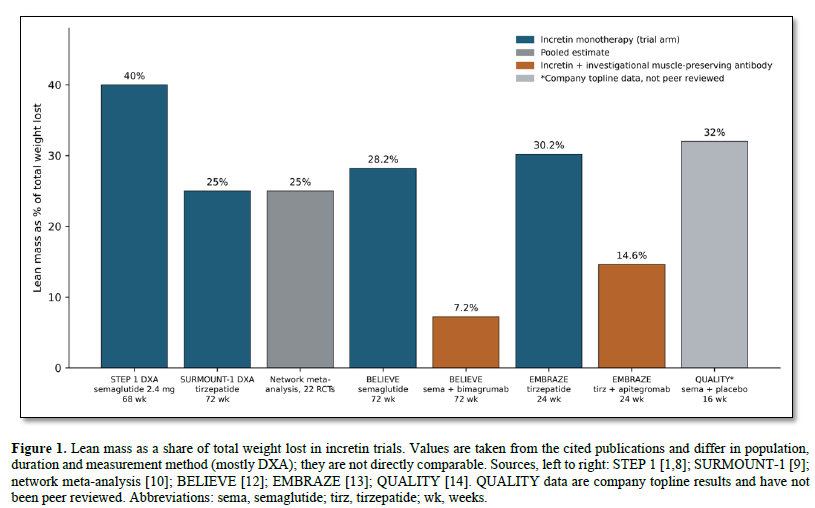
Reviews of incretin trials have reported lean fractions ranging from 15% or less to 40-60% of total weight loss, depending on the drug, the population and the method [8]. A network meta-analysis of 22 RCTs including 2,258 participants estimated that lean mass accounted for approximately 25% of weight loss with GLP-1RAs and co-agonists [10].
Two points qualify these figures. First, a lean fraction of 20-30% is broadly similar to that observed with caloric restriction and other forms of weight loss, which suggests that much of the effect is attributable to weight loss itself rather than to a direct catabolic action of the drugs [4,15]. Second, DXA lean soft tissue includes water, organs and connective tissue; it is not a direct measure of skeletal muscle, and short-term changes in hydration or glycogen can exaggerate apparent losses [3,7].
Muscle quantity versus muscle quality
Magnetic resonance imaging (MRI) adds information that DXA cannot. In a post-hoc analysis of the SURPASS-3 MRI substudy in type 2 diabetes, tirzepatide reduced thigh muscle volume by 0.64 L more than insulin degludec, but also reduced muscle fat infiltration by 0.36 percentage points, and the change in muscle volume was in the range expected for the degree of weight loss [11]. Linge, Birkenfeld and Neeland argued from such data that the muscle response to incretin therapy may be largely adaptive: muscle volume falls with lower body mass, while the composition of the remaining muscle improves [15].
The adaptive interpretation is reasonable for many participants in obesity trials, whose mean age is typically in the mid-forties and whose baseline muscle mass is often above average. It is less reassuring for older adults or for those already near diagnostic thresholds. The revised European definition of sarcopenia emphasizes strength (for example, grip strength below 27 kg in men or 16 kg in women, or five chair-stands taking longer than 15 s) as the primary criterion, with low appendicular lean mass (ALM) as confirmation [5]. The ESPEN/EASO consensus on sarcopenic obesity similarly requires impaired muscle function together with altered body composition, such as low ALM adjusted for weight [6]. None of the large incretin trials used these criteria as primary end points, and functional outcomes were rarely measured, which is the central evidence gap [3,7].
Lessons from weight loss in older adults
Lifestyle trials in older adults show both the risk and the remedy. In 160 dieting older adults with obesity, aerobic training alone was associated with the largest lean loss (about 2.7 kg), whereas resistance training alone (about 1.0 kg) or combined aerobic and resistance training (about 1.7 kg) attenuated the loss; the combined program produced the greatest improvement in physical function [16]. These data indicate that lean loss during intentional weight loss is modifiable and that the functional outcome depends more on the type of accompanying exercise than on the magnitude of weight loss alone.
Weight Regain and the Hypothesis of a Sarcopenic Ratchet
Incretin therapy is effective only while it is taken. In the STEP 1 extension, participants who stopped semaglutide regained about two-thirds of their prior weight loss within one year (11.6 of 17.3 percentage points), with a net reduction of 5.6% from baseline [17]. In SURMOUNT-4, participants who had lost 20.9% during a 36-week tirzepatide lead-in regained 14.0% after switching to placebo, whereas those who continued treatment lost a further 5.5% [18]. A systematic review of weight-management medications found that weight regain after cessation averaged about 0.4 kg per month, with return toward baseline within about 1.7 years [19].
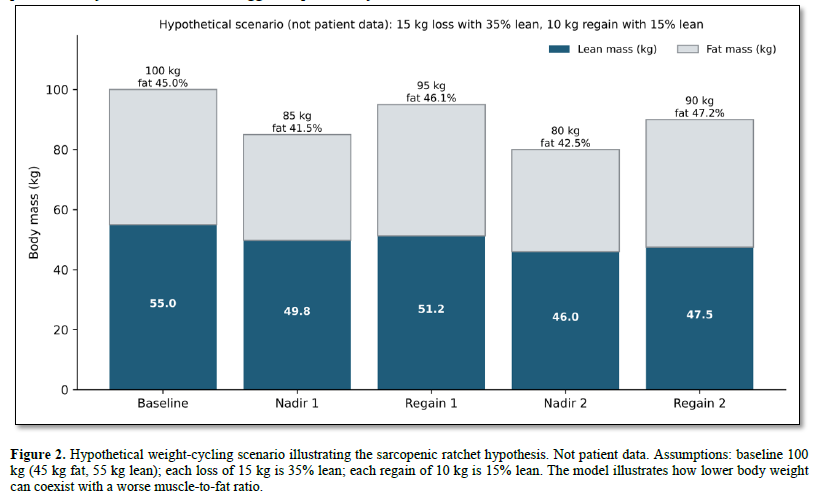
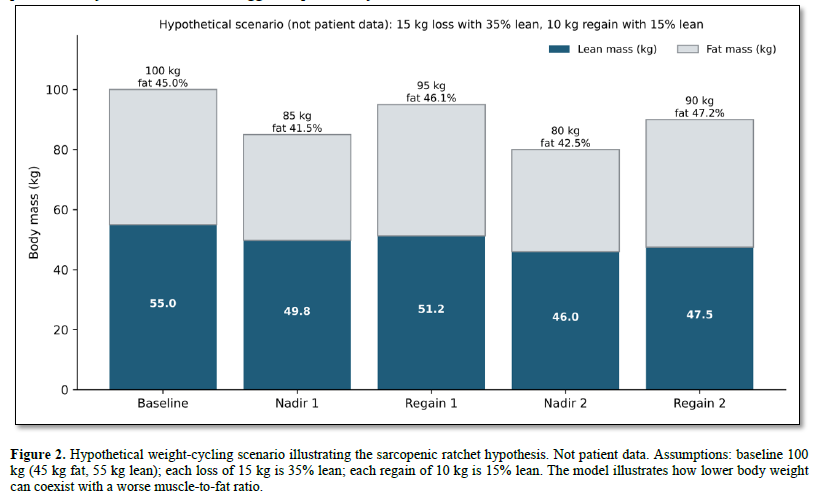
The composition of regained weight has not been characterized in detail in incretin trials. If regain consists predominantly of fat, as has been suggested particularly for older adults [7], repeated cycles of treatment and withdrawal could progressively lower lean mass while restoring fat mass. Figure 2 illustrates this concept with a deliberately simple, hypothetical scenario that is not based on patient data: assuming that 35% of a 15 kg loss is lean and that 15% of a 10 kg regain is lean, two cycles would leave a person 10 kg lighter than at baseline but with 7.5 kg less lean mass and a higher body-fat percentage (47.2% versus 45.0%). The input parameters are illustrative; the point is that a net reduction in body weight can coexist with a worse muscle-to-fat ratio. We term this possibility a sarcopenic ratchet and propose it as a testable hypothesis, not an established effect. It provides a rationale for including body-composition and functional measures during discontinuation and re-treatment, and for continuing exercise and adequate protein intake after the drug is stopped.
A STEM-CELL PERSPECTIVE ON MUSCLE PRESERVATION
Satellite cells and the myostatin-activin axis
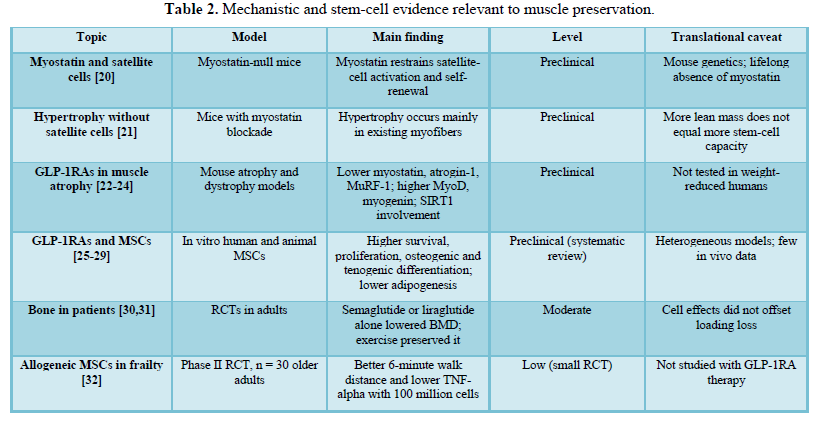
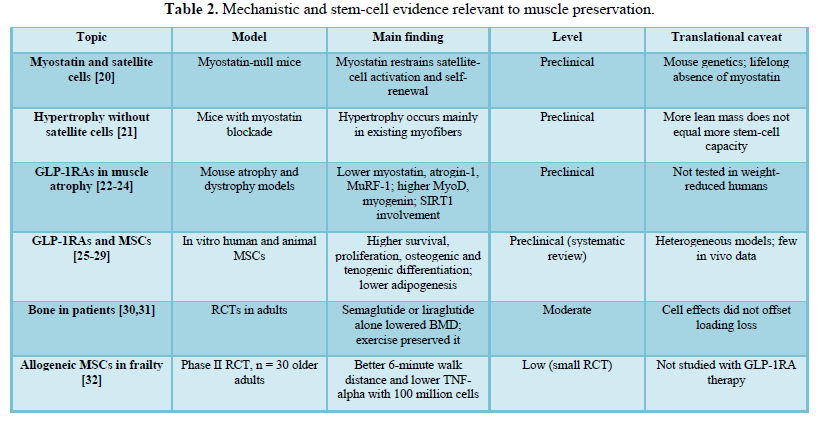
Skeletal muscle mass is regulated by the balance between protein synthesis and degradation in existing myofibers and, during regeneration and growth, by the activation of satellite cells, the resident muscle stem cells. Myostatin, a member of the transforming growth factor-beta family, restrains satellite-cell activation and self-renewal; in myostatin-null mice, satellite cells are more numerous and more readily activated [20]. However, hypertrophy driven by blockade of myostatin signaling can occur without satellite-cell contribution, indicating that the main effect on adult muscle mass is on the myofiber itself [21]. This distinction matters for interpreting both the risks of incretin-induced weight loss and the mechanism of investigational muscle-preserving antibodies, which act on myostatin, activin and their receptors (Table 2).
Experimental studies suggest that GLP-1RAs are not intrinsically catabolic in muscle. In mouse models of dexamethasone-induced and disease-related atrophy, exendin-4 reduced the expression of myostatin and of the atrophy-related ubiquitin ligases atrogin-1 and MuRF-1, increased the myogenic factors MyoD and myogenin, and preserved muscle mass and function; dulaglutide had similar effects in dystrophic mdx mice [22]. Liraglutide attenuated skeletal muscle atrophy in rodent models [23], and liraglutide and semaglutide improved obesity-associated muscle atrophy through a sirtuin 1-dependent pathway [24]. A recent review summarizes additional effects on Akt/mTOR, AMPK-PGC-1alpha and mitochondrial biogenesis, while emphasizing that effects on human satellite cells have not been demonstrated [33]. These are preclinical findings in atrophy models, not in weight-reduced humans, and should not be read as evidence that GLP-1RAs build muscle in patients.
Mesenchymal stem cells, bone and adipose tissue
MSCs are the shared progenitors of osteoblasts, adipocytes, chondrocytes and tenocytes, and they also contribute to the fibro-adipogenic environment of muscle. A 2026 systematic review of 38 studies concluded that GLP-1RAs generally increase MSC proliferation, survival and osteogenic differentiation and reduce adipogenic differentiation in vitro, while noting heterogeneous models and few in vivo human data [25]. Exendin-4 promoted bone marrow MSC proliferation and migration and reduced apoptosis [26], protected MSCs against oxygen, glucose and serum deprivation through cAMP/PKA signaling and attenuation of endoplasmic reticulum stress [27], and induced tenogenic differentiation of human MSCs [28]. GLP-1 has also been proposed as a regulator of MSC behavior in the context of type 2 diabetes [29].
Clinical bone data do not yet confirm a protective net effect. In a 52-week RCT in 64 adults at increased fracture risk, semaglutide 1.0 mg increased the bone-resorption marker CTX and reduced areal bone mineral density (BMD) at the lumbar spine and total hip relative to placebo [30]. In a trial in adults with obesity after diet-induced weight loss, liraglutide alone reduced hip and spine BMD compared with exercise, whereas the combination of liraglutide and exercise preserved BMD [31]. Thus, the favorable in vitro profile of GLP-1RAs on MSC lineage choice appears to be outweighed in vivo by the skeletal consequences of weight loss and reduced mechanical loading, unless exercise is added.
A regenerative-medicine reader will also ask whether cell-based therapies could protect muscle during incretin therapy. The closest clinical evidence comes from aging frailty: in a phase II randomized, double-blind trial of 30 older adults, intravenous allogeneic bone marrow MSCs (100 million cells) improved 6-minute walk distance and reduced serum tumor necrosis factor-alpha at 6 months, without treatment-related serious adverse events [32]. No study has evaluated MSCs, MSC-derived extracellular vesicles or other cell products for preventing lean loss during GLP-1RA therapy, and such use should currently be confined to registered clinical trials.
Common Adverse Effects Beyond Muscle
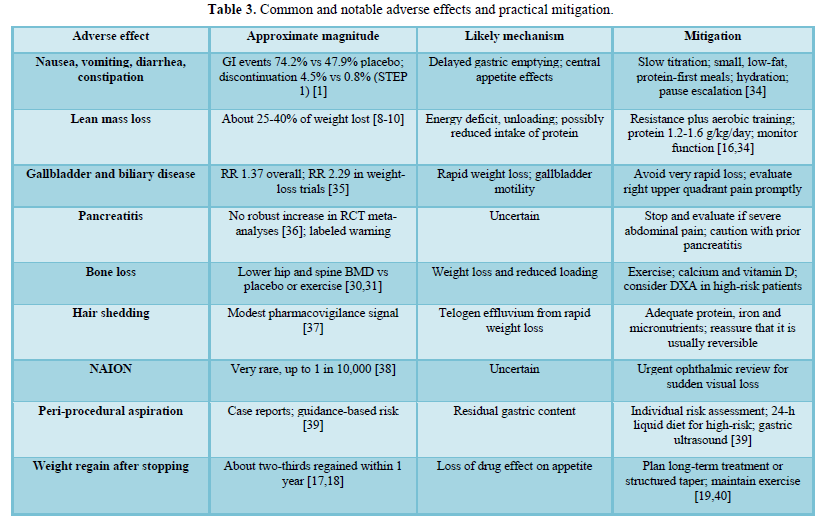
Table 3 summarizes the most common and clinically relevant adverse effects, their approximate magnitude and practical mitigation. Gastrointestinal (GI) events are the most frequent. In STEP 1, 74.2% of semaglutide recipients and 47.9% of placebo recipients reported GI events, mostly nausea (44.2%), diarrhea (31.5%), vomiting (24.8%) and constipation (23.4%); these were usually mild to moderate and transient, and led to discontinuation in 4.5% versus 0.8% [1]. Slow dose escalation, smaller and lower-fat meals, adequate hydration and pausing escalation when symptoms persist are the main countermeasures [34]. GI symptoms also reduce food intake and can make adequate protein intake more difficult, which links tolerability directly to muscle preservation.
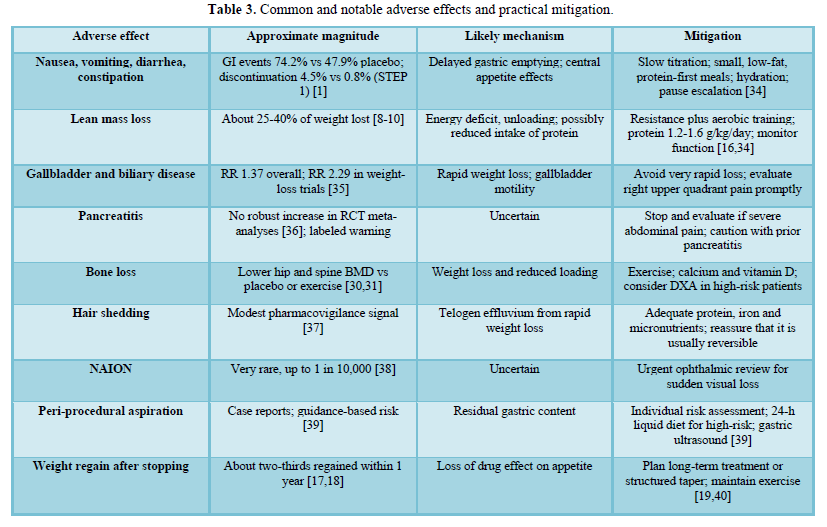
Gallbladder and biliary disease are a consistent signal. A meta-analysis of 76 RCTs found an increased risk of gallbladder or biliary disease with GLP-1RAs (relative risk 1.37), higher in weight-loss trials (relative risk 2.29), at higher doses and with longer treatment, corresponding to about 27 additional events per 10,000 person-years [35]. Rapid weight loss is a known contributor. Pancreatitis remains a labeled warning, but meta-analyses of RCTs have not shown a statistically robust increase [36]. In a large observational analysis of United States veterans, GLP-1RA use was associated with lower risks of several neuropsychiatric, cardiometabolic and other outcomes, but with higher risks of GI disorders, hypotension, syncope, arthritic disorders, nephrolithiasis, interstitial nephritis and drug-induced pancreatitis [41].
Rare but serious events deserve awareness. The European Medicines Agency concluded in 2025 that NAION is a very rare side effect of semaglutide (up to 1 in 10,000 users) [38]. Hair shedding, usually consistent with telogen effluvium related to rapid weight loss and nutritional stress, has been reported, and pharmacovigilance analyses suggest a modest disproportionality signal [37]. Delayed gastric emptying raises peri-procedural aspiration concerns; multisociety guidance in 2024 advised that most patients may continue GLP-1RAs before elective procedures, with a 24-hour liquid diet for those at higher risk and consideration of gastric ultrasound when residual gastric content is uncertain [39].
COUNTERMEASURES: WHAT WORKS AND HOW WELL
Nutrition
A joint advisory from four North American societies recommends protein intakes of about 1.2-1.6 g/kg of adjusted body weight per day (roughly 80-120 g/day for many patients), protein-first meal patterns, small frequent meals during periods of reduced appetite, and attention to micronutrients including vitamin D, calcium, iron and vitamin B12 [34]. The advisory also recommends resistance training and monitoring of nutritional status. In resistance-trained populations, the benefit of protein supplementation on lean mass plateaus at about 1.6 g/kg/day [42], suggesting that intakes above this level add little for most patients. Because GLP-1RAs reduce appetite and total intake, achieving these targets often requires deliberate meal planning, a dietitian and, in some cases, protein supplements.
Exercise
Exercise is the intervention with the strongest evidence. In a randomized trial of weight-loss maintenance after a low-calorie diet, the combination of liraglutide and exercise produced the greatest reduction in body fat and best-preserved weight loss, compared with either intervention alone [40]. The same program preserved BMD, whereas liraglutide alone did not [31]. In older adults, combined aerobic and resistance training best protected function during weight loss [16]. Pragmatically, progressive resistance exercise two to three times per week for major muscle groups, combined with aerobic activity, should be started at or before treatment initiation, with supervision for older, frail or deconditioned patients.
Supplements
Creatine monohydrate combined with resistance training increased lean tissue mass by about 1.37 kg and improved strength in a meta-analysis of 22 RCTs in older adults [43]. It has not been tested specifically in GLP-1RA users, and creatine raises serum creatinine without changing kidney function, which should be considered when interpreting laboratory results. Vitamin D, calcium and vitamin B12 should be checked and corrected were deficient, in line with the joint advisory [34].
Investigational muscle-preserving drugs
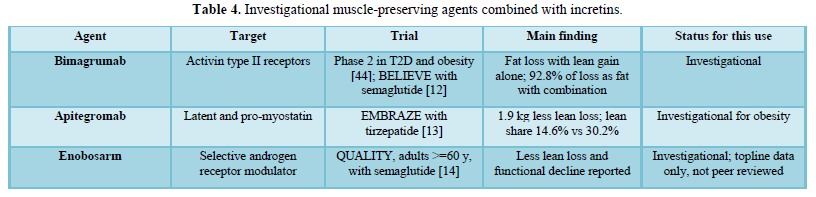
Several drugs that target myostatin, activin or androgen receptors are being tested with incretins (Table 4). In an earlier phase 2 trial in adults with type 2 diabetes and obesity, the activin type II receptor antibody bimagrumab reduced fat mass by 20.5% while increasing lean mass by 3.6% over 48 weeks [44]. In the phase 2 BELIEVE trial (n = 507), bimagrumab plus semaglutide produced a 22.1% weight loss at 72 weeks versus 15.7% with semaglutide alone; 92.8% of the weight lost with the combination was fat, compared with 71.8% with semaglutide [12]. In the phase 2 EMBRAZE trial (n = 102), the myostatin-specific antibody apitegromab added to tirzepatide reduced lean mass loss by 1.9 kg over 24 weeks; lean mass made up 14.6% of total weight lost compared with 30.2% with tirzepatide alone [13]. In the phase 2b QUALITY trial in adults aged 60 years or older (n = 168), the selective androgen receptor modulator enobosarm added to semaglutide was reported to reduce lean-mass loss and declines in stair-climbing power; these data were released as company topline results and have not been published in a peer-reviewed journal [14].
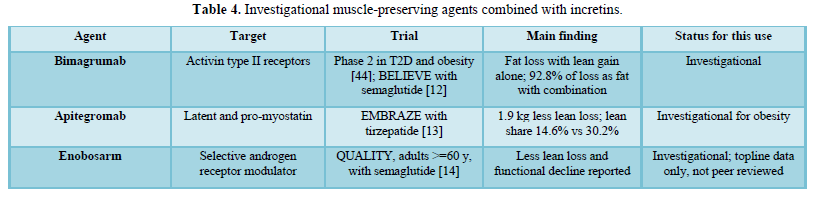
These agents should be regarded as investigational for this indication. Larger and longer trials must establish whether preserving DXA lean mass translates into better strength, function, falls and fractures, and must define safety, including effects of activin blockade on other tissues [45]. None of these agents is approved for preserving muscle during GLP-1RA therapy.
The SHIELD Framework
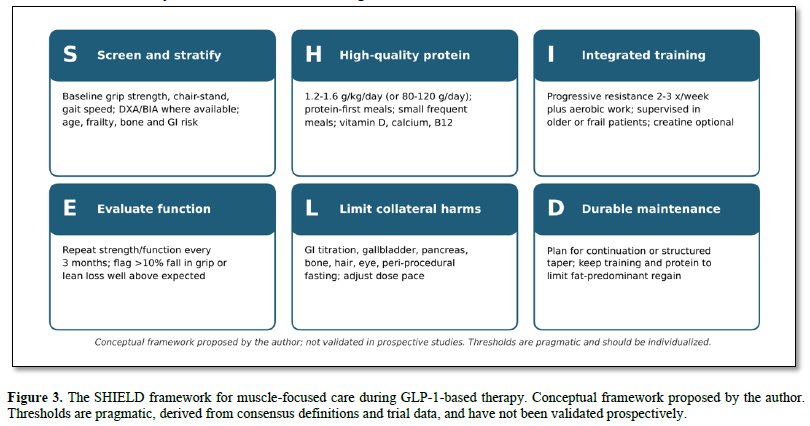
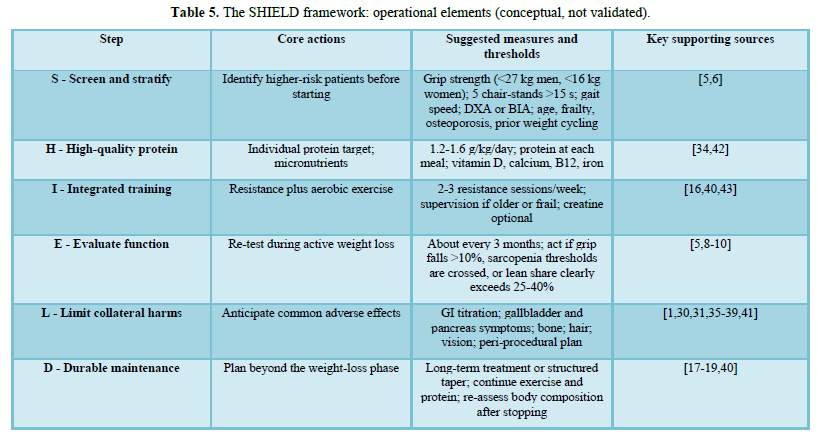
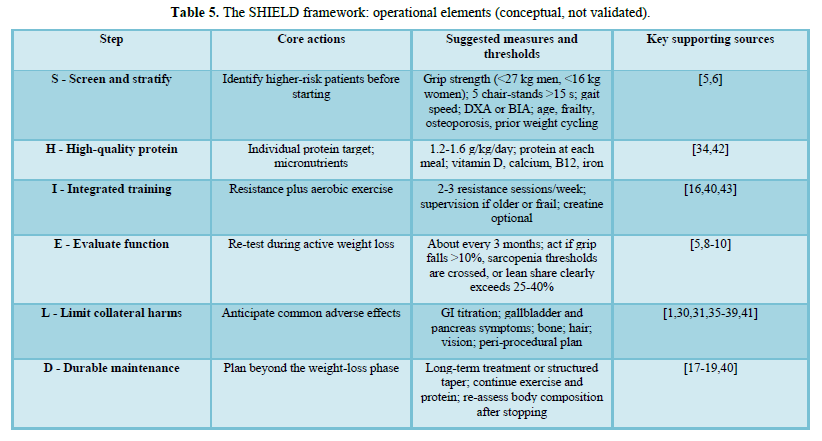
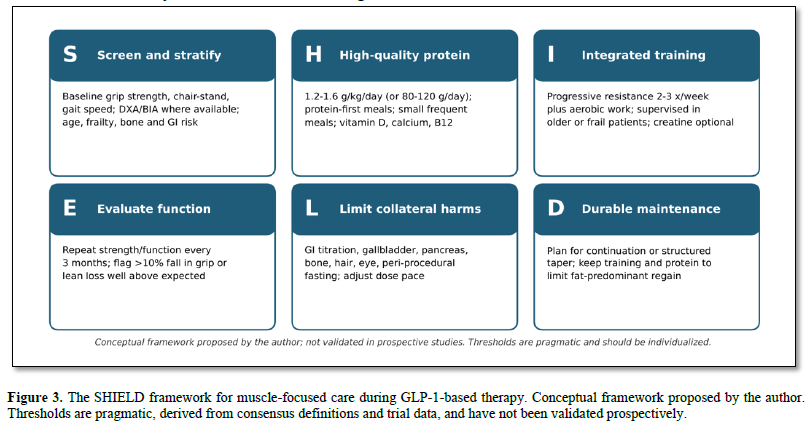
To make the evidence usable in practice, we propose SHIELD, a six-step framework that reorients monitoring from body weight to muscle function (Figure 3; Table 5). S (Screen and stratify): before treatment, document grip strength, chair-stand time and gait speed, and, where available, body composition by DXA or validated bioelectrical impedance analysis (BIA); identify higher-risk patients, such as those aged 65 years or older, with frailty, low baseline strength, osteoporosis, previous weight cycling or very rapid expected weight loss. H (High-quality protein): set an individual protein target of 1.2-1.6 g/kg/day, distributed across meals, and correct micronutrient deficiencies. I (Integrated training): prescribe progressive resistance exercise combined with aerobic activity, supervised for higher-risk patients; creatine can be considered as an adjunct. E (Evaluate function): repeat the functional tests about every three months during active weight loss; a fall of more than 10% in grip strength, a new crossing of sarcopenia thresholds, or lean loss clearly above the expected 25-40% fraction should prompt slower dose escalation, a lower maintenance dose or a review of nutrition and exercise. L (Limit collateral harms): address GI tolerability, gallbladder symptoms, bone health, hair shedding, visual symptoms and peri-procedural planning. D (Durable maintenance): plan from the outset for long-term treatment or a structured taper, and maintain exercise and protein intake after discontinuation to reduce the risk of fat-predominant regain.
The thresholds in SHIELD are pragmatic choices derived from consensus definitions [5,6] and from the trial data summarized above; they have not been validated against clinical outcomes. SHIELD is intended as a structure for clinical care and for designing studies, not as a guideline.
DISCUSSION
The question of whether lean loss during incretin therapy is harmful cannot be answered with a single yes or no. The trial evidence supports three conclusions. First, lean tissue accounts for a meaningful but variable fraction of weight loss, typically about a quarter, with wide variation by drug, population and method [9,10]. Second, at least in some populations, muscle composition improves as fat infiltration falls, which is consistent with an adaptive response [11,15]. Third, the people most likely to be harmed (older adults, people with low baseline muscle reserve, and people who cycle through treatment and withdrawal) are the least represented in trials and the least studied with functional outcomes [3,7].
The stem-cell perspective adds nuance. Preclinical studies suggest that GLP-1RAs suppress myostatin and atrophy pathways in muscle and favor osteogenic over adipogenic differentiation of MSCs [22,25]. If these effects occur in humans, part of the lean loss observed in trials would be driven by energy deficit and unloading rather than by the drug, which is consistent with the observation that exercise largely prevents it [16,31,40]. Conversely, the clinical bone data show that favorable cellular effects do not guarantee favorable tissue outcomes when mechanical loading falls [30]. The investigational antibodies make the myostatin-activin axis a direct therapeutic target, but the experimental evidence that myostatin blockade increases muscle mass mainly through myofiber hypertrophy rather than satellite-cell expansion [21] cautions against assuming that more lean mass will mean regenerative capacity or better function.
This review has limitations. It is narrative rather than systematic, and selection bias cannot be excluded. Many body-composition analyses are substudies with small samples and short follow-up, and they rely on DXA lean mass rather than direct skeletal muscle measures. Some evidence for investigational agents comes from company releases rather than peer-reviewed publications. The sarcopenic ratchet hypothesis and the SHIELD framework are original proposals that require empirical testing.
Research priorities follow directly. Trials should include strength and physical function as co-primary or key secondary end points; use direct muscle measures such as MRI or D3-creatine dilution in addition to DXA [7]; enroll older and frail participants; characterize the composition of regained weight after withdrawal; and test whether structured exercise and protein programs, or investigational muscle-preserving drugs, improve outcomes that matter to patients. Translational studies could measure satellite-cell number and function and MSC-related markers in muscle biopsies from treated patients, and any evaluation of cell-based approaches should take place within registered trials.
CONCLUSION
GLP-1-based therapies cause clinically important weight loss, of which roughly a quarter to two-fifths is lean tissue. For many patients this is a proportional and possibly adaptive change; for older, frail or weight-cycling patients it may accelerate sarcopenia. Common adverse effects, especially GI intolerance, gallbladder disease and bone loss, are frequent or consistent enough to require proactive management. The best-supported countermeasures are simple: resistance and combined exercise, adequate protein and micronutrients, careful dose titration and a long-term maintenance plan. Muscle-preserving drugs are promising but investigational, and stem-cell-based interventions are at an exploratory stage. The SHIELD framework offers a practical structure for shifting the clinical focus from how much weight is lost to how much muscle and function are preserved.
DECLARATIONS
Ethics approval and consent to participate: Not applicable. This review is based on published literature and public regulatory documents; no human participants, patient data or animals were involved.
Consent for publication: Not applicable.
Data availability: No new data were generated. The values shown in Figure 1 are taken from the cited publications; Figure 2 shows a hypothetical calculation whose parameters are fully stated in the text and legend.
Competing interests: None
Funding: This work received no specific grant from any funding agency in the public, commercial or not-for-profit sectors.
Authors' contributions: M.H.K., E.P. and M.A.P. conceived the review, developed the source corpus, designed the comparative framework, interpreted the evidence, and drafted and all authors approved the final manuscript.
Use of artificial intelligence: An AI-based assistant was used to support literature retrieval, bibliographic verification, language editing and figure drafting. The author reviewed and verified all content, sources and calculations and takes full responsibility for the manuscript.
Acknowledgements: None.
- Wilding JPH, Batterham RL, Calanna S, Davies M, Van Gaal LF, et al. (2021) Once-weekly semaglutide in adults with overweight or obesity. N Engl J Med 384(11):989-1002. doi:10.1056/NEJMoa2032183
- Jastreboff AM, Aronne LJ, Ahmad NN, Wharton S, Connery L, et al. (2022) Tirzepatide once weekly for the treatment of obesity. N Engl J Med 387(3):205-216. doi:10.1056/NEJMoa2206038
- Conte C, Hall KD, Klein S (2024) Is weight loss-induced muscle mass loss clinically relevant? JAMA 332(1):9-10. doi:10.1001/jama.2024.6586
- Prado CM, Phillips SM, Gonzalez MC, Heymsfield SB (2024) Muscle matters: the effects of medically induced weight loss on skeletal muscle. Lancet Diabetes Endocrinol 12(11):785-787. doi:10.1016/S2213-8587(24)00272-9
- Cruz-Jentoft AJ, Bahat G, Bauer J, Boirie Y, Bruyere O, et al. (2019) Sarcopenia: revised European consensus on definition and diagnosis. Age Ageing 48(1):16-31. doi:10.1093/ageing/afy169
- Donini LM, Busetto L, Bischoff SC, Cederholm T, Ballesteros-Pomar MD, et al. (2022) Definition and diagnostic criteria for sarcopenic obesity: ESPEN and EASO consensus statement. Clin Nutr 41(4):990-1000. doi:10.1016/j.clnu.2021.11.014
- Evans WJ, Cummings S (2024) Weight loss-induced muscle mass loss. JAMA 332(16):1394. doi:10.1001/jama.2024.17212
- Neeland IJ, Linge J, Birkenfeld AL (2024) Changes in lean body mass with glucagon-like peptide-1-based therapies and mitigation strategies. Diabetes Obes Metab 26(Suppl 4):16-27. doi:10.1111/dom.15728
- Look M, Dunn JP, Kushner RF, Cao D, Harris C, et al. (2025) Body composition changes during weight reduction with tirzepatide in the SURMOUNT-1 study of adults with obesity or overweight. Diabetes Obes Metab 27(5):2720-2729. doi:10.1111/dom.16275
- Karakasis P, Patoulias D, Fragakis N, Mantzoros CS (2025) Effect of glucagon-like peptide-1 receptor agonists and co-agonists on body composition: systematic review and network meta-analysis. Metabolism 164:156113. doi:10.1016/j.metabol.2024.156113
- Sattar N, Neeland IJ, Dahlqvist Leinhard O, Fernandez Lando L, Bray R, et al. (2025) Tirzepatide and muscle composition changes in people with type 2 diabetes (SURPASS-3 MRI): a post-hoc analysis of a randomised, open-label, parallel-group, phase 3 trial. Lancet Diabetes Endocrinol 13(6):482-493. doi:10.1016/S2213-8587(25)00027-0
- Heymsfield SB, Aronne LJ, Montgomery P, Klickstein LB, Coleman LA, et al. (2026) Bimagrumab plus semaglutide alone or in combination for the treatment of obesity: a randomized phase 2 trial. Nat Med 32(3):869-882. doi:10.1038/s41591-026-04204-0
- Pratley RE, Denham DS, Trivedi R, Watkins E, Connery L, et al. (2026) Apitegromab for lean mass preservation during tirzepatide-induced weight loss: a randomized, double-blind, placebo-controlled phase 2 trial. Nat Med 32(7):2673-2678. doi:10.1038/s41591-026-04440-4
- Veru Inc. (2025) Veru announces positive topline data from Phase 2b QUALITY clinical study [press release, 27 January 2025; not peer reviewed]. https://ir.verupharma.com/news-events/press-releases/detail/225/veru-announces-positive-topline-data-from-phase-2b-quality
- Linge J, Birkenfeld AL, Neeland IJ (2024) Muscle mass and glucagon-like peptide-1 receptor agonists: adaptive or maladaptive response to weight loss? Circulation 150(16):1288-1298. doi:10.1161/CIRCULATIONAHA.124.067676
- Villareal DT, Aguirre L, Gurney AB, Waters DL, Sinacore DR, et al. (2017) Aerobic or resistance exercise, or both, in dieting obese older adults. N Engl J Med 376(20):1943-1955. doi:10.1056/NEJMoa1616338
- Wilding JPH, Batterham RL, Davies M, Van Gaal LF, Kandler K, et al. (2022) Weight regain and cardiometabolic effects after withdrawal of semaglutide: the STEP 1 trial extension. Diabetes Obes Metab 24(8):1553-1564. doi:10.1111/dom.14725
- Aronne LJ, Sattar N, Horn DB, Bays HE, Wharton S, et al. (2024) Continued treatment with tirzepatide for maintenance of weight reduction in adults with obesity: the SURMOUNT-4 randomized clinical trial. JAMA 331(1):38-48. doi:10.1001/jama.2023.24945
- West S, Scragg J, Aveyard P, Oke JL, Willis L, et al. (2026) Weight regain after cessation of medication for weight management: systematic review and meta-analysis. BMJ 392:e085304. doi:10.1136/bmj-2025-085304
- McCroskery S, Thomas M, Maxwell L, Sharma M, Kambadur R (2003) Myostatin negatively regulates satellite cell activation and self-renewal. J Cell Biol 162(6):1135-1147. doi:10.1083/jcb.200207056
- Amthor H, Otto A, Vulin A, Rochat A, Dumonceaux J, et al. (2009) Muscle hypertrophy driven by myostatin blockade does not require stem/precursor-cell activity. Proc Natl Acad Sci USA 106(18):7479-7484. doi:10.1073/pnas.0811129106
- Hong Y, Lee JH, Jeong KW, Choi CS, Jun HS (2019) Amelioration of muscle wasting by glucagon-like peptide-1 receptor agonist in muscle atrophy. J Cachexia Sarcopenia Muscle 10(4):903-918. doi:10.1002/jcsm.12434
- Gurjar AA, Kushwaha S, Chattopadhyay S, Das N, Pal S, et al. (2020) Long acting GLP-1 analog liraglutide ameliorates skeletal muscle atrophy in rodents. Metabolism 103:154044. doi:10.1016/j.metabol.2019.154044
- Xiang J, Qin L, Zhong J, Xia N, Liang Y (2023) GLP-1RA liraglutide and semaglutide improves obesity-induced muscle atrophy via SIRT1 pathway. Diabetes Metab Syndr Obes 16:2433-2446. doi:10.2147/DMSO.S425642
- Weber L, Hashemnia Sharbabaki M, Fuchs B, Alberton P, Giunta R, et al. (2026) The influence of GLP-1 agonists on human mesenchymal stem cells: a systematic review. Stem Cell Rev Rep 22(1):26-46. doi:10.1007/s12015-025-11002-7
- Zhou H, Li D, Shi C, Xin T, Yang J, et al. (2015) Effects of exendin-4 on bone marrow mesenchymal stem cell proliferation, migration and apoptosis in vitro. Sci Rep 5:12898. doi:10.1038/srep12898
- He J, Wang C, Sun Y, Lu B, Cui J, et al. (2016) Exendin-4 protects bone marrow-derived mesenchymal stem cells against oxygen/glucose and serum deprivation-induced apoptosis through the activation of the cAMP/PKA signaling pathway and the attenuation of ER stress. Int J Mol Med 37(4):889-900. doi:10.3892/ijmm.2016.2509
- Abdulmalik S, Ramos D, Rudraiah S, Banasavadi-Siddegowda YK, Kumbar SG (2021) The glucagon-like peptide 1 receptor agonist exendin-4 induces tenogenesis in human mesenchymal stem cells. Differentiation 120:1-9. doi:10.1016/j.diff.2021.05.001
- Shao Z, Zhang X, Cai J, Lu F (2025) Glucagon-like peptide-1: a new potential regulator for mesenchymal stem cells in the treatment of type 2 diabetes mellitus and its complications. Stem Cell Res Ther 16(1):248. doi:10.1186/s13287-025-04369-4
- Hansen MS, Wolfel EM, Jeromdesella S, Moller JJK, Ejersted C, et al. (2024) Once-weekly semaglutide versus placebo in adults with increased fracture risk: a randomised, double-blinded, two-centre, phase 2 trial. eClinicalMedicine 72:102624. doi:10.1016/j.eclinm.2024.102624
- Jensen SBK, Sorensen V, Sandsdal RM, Lehmann EW, Lundgren JR, et al. (2024) Bone health after exercise alone, GLP-1 receptor agonist treatment, or combination treatment: a secondary analysis of a randomized clinical trial. JAMA Netw Open 7(6):e2416775. doi:10.1001/jamanetworkopen.2024.16775
- Tompkins BA, DiFede DL, Khan A, Landin AM, Schulman IH, et al. (2017) Allogeneic mesenchymal stem cells ameliorate aging frailty: a phase II randomized, double-blind, placebo-controlled clinical trial. J Gerontol A Biol Sci Med Sci 72(11):1513-1522. doi:10.1093/gerona/glx137
- Gonzalez-Luis A, Llinares-Arvelo V, Martinez-Alberto CE, Hernandez-Carballo C, Mora-Fernandez C, et al. (2025) Glucagon-like peptide-1 receptor agonists and muscle health: potential role in sarcopenia prevention and treatment. Eur J Endocrinol 193(5):R31-R44. doi:10.1093/ejendo/lvaf223
- Mozaffarian D, Agarwal M, Aggarwal M, Alexander L, Apovian CM, et al. (2025) Nutritional priorities to support GLP-1 therapy for obesity: a joint Advisory from the American College of Lifestyle Medicine, the American Society for Nutrition, the Obesity Medicine Association, and The Obesity Society. Am J Clin Nutr 122(1):344-367. doi:10.1016/j.ajcnut.2025.04.023
- He L, Wang J, Ping F, Yang N, Huang J, et al. (2022) Association of glucagon-like peptide-1 receptor agonist use with risk of gallbladder and biliary diseases: a systematic review and meta-analysis of randomized clinical trials. JAMA Intern Med 182(5):513-519. doi:10.1001/jamainternmed.2022.0338
- Wen J, Nadora D, Bernstein E, How-Volkman C, Truong A, et al. (2025) Evaluating the rates of pancreatitis and pancreatic cancer among GLP-1 receptor agonists: a systematic review and meta-analysis of randomised controlled trials. Endocrinol Diabetes Metab 8(5):e70113. doi:10.1002/edm2.70113
- Branyiczky MK, Lowe MS, McMullen E, Donovan J, Khosravi-Hafshejani T (2026) Effects of GLP-1 receptor agonists on hair loss and regrowth: a systematic review. Int J Dermatol 65(5):1030-1032. doi:10.1111/ijd.70133
- European Medicines Agency (2025) PRAC concludes eye condition NAION is a very rare side effect of semaglutide medicines Ozempic, Rybelsus and Wegovy. Amsterdam: EMA. https://www.ema.europa.eu/en/news/prac-concludes-eye-condition-naion-very-rare-side-effect-semaglutide-medicines-ozempic-rybelsus-wegovy
- Kindel TL, Wang AY, Wadhwa A, Schulman AR, Sharaiha RZ, et al. (2024) Multisociety clinical practice guidance for the safe use of glucagon-like peptide-1 receptor agonists in the perioperative period. Surg Obes Relat Dis 20(12):1183-1186. doi:10.1016/j.soard.2024.08.033
- Lundgren JR, Janus C, Jensen SBK, Juhl CR, Olsen LM, et al. (2021) Healthy weight loss maintenance with exercise, liraglutide, or both combined. N Engl J Med 384(18):1719-1730. doi:10.1056/NEJMoa2028198
- Xie Y, Choi T, Al-Aly Z (2025) Mapping the effectiveness and risks of GLP-1 receptor agonists. Nat Med 31(3):951-962. doi:10.1038/s41591-024-03412-w
- Morton RW, Murphy KT, McKellar SR, Schoenfeld BJ, Henselmans M, et al. (2018) A systematic review, meta-analysis and meta-regression of the effect of protein supplementation on resistance training-induced gains in muscle mass and strength in healthy adults. Br J Sports Med 52(6):376-384. doi:10.1136/bjsports-2017-097608
- Chilibeck PD, Kaviani M, Candow DG, Zello GA (2017) Effect of creatine supplementation during resistance training on lean tissue mass and muscular strength in older adults: a meta-analysis. Open Access J Sports Med 8:213-226. doi:10.2147/OAJSM.S123529
- Heymsfield SB, Coleman LA, Miller R, Rooks DS, Laurent D, et al. (2021) Effect of bimagrumab vs placebo on body fat mass among adults with type 2 diabetes and obesity: a phase 2 randomized clinical trial. JAMA Netw Open 4(1):e2033457. doi:10.1001/jamanetworkopen.2020.33457
- Conte C (2026) Muscle-preserving therapies in the era of pharmacological weight loss. Obes Endocrinol 2(1):wjaf020. doi:10.1093/obendo/wjaf02
-
 Table 1
-
Table 2
-
Table 3
-
Table 4
-
Table 5
QUICK LINKS
- SUBMIT MANUSCRIPT
- RECOMMEND THE JOURNAL
-
SUBSCRIBE FOR ALERTS
RELATED JOURNALS
- Journal of Immunology Research and Therapy (ISSN:2472-727X)
- International Journal of Anaesthesia and Research (ISSN:2641-399X)
- International Journal of AIDS (ISSN: 2644-3023)
- Journal of Cell Signaling & Damage-Associated Molecular Patterns
- Oncology Clinics and Research (ISSN: 2643-055X)
- International Journal of Surgery and Invasive Procedures (ISSN:2640-0820)
- Dermatology Clinics and Research (ISSN:2380-5609)