
| Márcio Hiroaki Kume*, Bianca Furlan, Camila Gobatto Boaventura, Mônica Andréa Probst, Edson Peracchi, Carmen Austrália Paredes Marcondes Ribas |
| Corresponding Author: Márcio Hiroaki Kume, 80250-190, Iguassu Avenue, 1236, Brazil. |
| Received: October 19, 2026; Revised: October 22, 2026; Accepted: October 23, 2026 Available Online: October 24, 2026 |
| DOI: doi.org/10.5281/zenodo.23762654 |
| Citation: Kume MH, Furlan B, Boaventura CG, Probst MA, Peracchi E, et al. (2026) Energy, Signal and Load: A Comparative Functional Taxonomy of Physical Therapies as Adjuncts to Stem Cell and Orthobiologic Regenerative Medicine. Stem Cell Res Ther, 9(1): 241-252. |
| Copyrights: ©2026 Kume MH, Furlan B, Boaventura CG, Probst MA, Peracchi E, et al. This is an open-access article distributed under the terms of the Creative Commons Attribution License, which permits unrestricted use, distribution, and reproduction in any medium, provided the original author and source are credited. |
| Share : |
35
Views & Citations10
Likes & Shares
Results: We propose a five-class functional taxonomy: structural/mechanotransductive stimulators (ESWT, PEMF for bone, NMES), a bioenergetic modulator (PBM), thermal tissue preparers, neural/contextual enablers, and symptomatic modulators with an adaptive cost (cryotherapy). Independent evidence supported high-energy ESWT for calcific rotator cuff tendinopathy, ESWT for greater trochanteric pain and nonunion, adequately dosed PBM for knee osteoarthritis and NMES after knee surgery. It did not support adding ESWT to eccentric loading in patellar tendinopathy, or whole-body cryotherapy. Most modalities converge on calcium and nitric oxide signaling and show biphasic dose responses; factorial data with orthobiologics are scarce.
Conclusions: Physical therapies are best framed as adjuncts that prepare, amplify or permit the signals delivered by progressive loading and orthobiologics. An essentiality test, peri-injection timing rules and factorial add-on trials are proposed to reduce redundancy and overclaiming.
Keywords: photobiomodulation; extracorporeal shockwave therapy; pulsed electromagnetic field; mesenchymal stem cells; platelet-rich plasma; regenerative rehabilitation.
In parallel, the market offers a growing range of devices that deliver light, acoustic pressure waves, electric currents, magnetic fields, heat or cold. Each modality has its own literature, dose vocabulary and commercial narrative. The clinician who must decide whether to add PBM, ESWT, PEMF or TECAR to an injection-plus-exercise plan rarely finds a framework that compares them on common terms. Single-modality reviews answer the question "does X work for condition Y?" but not the more practical questions: what does X add that loading and the biologic do not already provide, when in the repair timeline should it be used, and which combinations are redundant?
The clinical guide Physical Therapies in Regenerative Medicine (Kume, 2026) organizes these modalities within one framework, covering mechanism, parameters, indications, contraindications, evidence and integration with orthobiologics across 31 chapters [5]. The present article is not a summary of that book. It uses the book's content as a structured source corpus and performs an explicit cross-modality comparison that the book does not present as a single analysis. The aims were (i) to build a functional taxonomy of physical therapies according to the biological axis they primarily target; (ii) to compare modalities across common dimensions in a single matrix; (iii) to check the main efficacy statements against independent primary trials and meta-analyses; (iv) to identify convergence and redundancy among modalities; and (v) to derive timing rules, decision rules and a research agenda relevant to stem cell and orthobiologic practice.
METHODS
Design
This is a structured comparative critical review with a narrative synthesis. It is not a systematic review: no exhaustive database search, risk-of-bias assessment or quantitative pooling was performed, and no GRADE certainty ratings were generated. Where certainty ratings are mentioned, they are those reported by the cited meta-analyses.
Source corpus
The primary corpus was the full text of Physical Therapies in Regenerative Medicine, first edition (2026; 159 pages, 7 parts, 31 chapters, 94 references) [5]. The book covers the foundations of regenerative rehabilitation (Part I; chapters 1 to 4), PBM (chapters 5 to 9), ESWT (chapters 10 to 15), bioelectric and electromagnetic modalities (chapters 16 to 19), thermal and cold modalities (chapters 20 to 23), manual, needle and neuromodulatory interventions (chapters 24 to 28), and clinical integration (chapters 29 to 31).
Comparative coding
Each modality described in the corpus was coded across eleven dimensions defined before extraction: (1) physical energy form; (2) primary biological target, using the five healing-microenvironment axes defined in the corpus (vascular/oxygen supply, mechanical load signaling, metabolic/mitochondrial state, resolution of inflammation and neural regulation); (3) effective tissue depth; (4) onset and time course of effect; (5) repair-phase window; (6) parameter dependence; (7) strength of clinical evidence; (8) principal risks and contraindications; (9) cost and logistic burden; (10) interface with MSC and orthobiologic therapies; and (11) explicit limits of claims. Evidence was described qualitatively as consistent, moderate, modest or heterogeneous, limited, or insufficient. These labels are the author's interpretation and are not a validated grading instrument.
External verification
Because the corpus is a clinical guide written by the author of this review, its key quantitative and efficacy statements were checked against independent sources. These were landmark randomized controlled trials (RCTs) and recent systematic reviews or meta-analyses identified by targeted searches of PubMed, PubMed Central and publisher websites (search completed October 2026). During this step, several mismatches between in-text citation numbers and the reference list of the source book were identified. Only references verified directly against their original records are cited here.
RESULTS
Five energy forms, one convergent biology
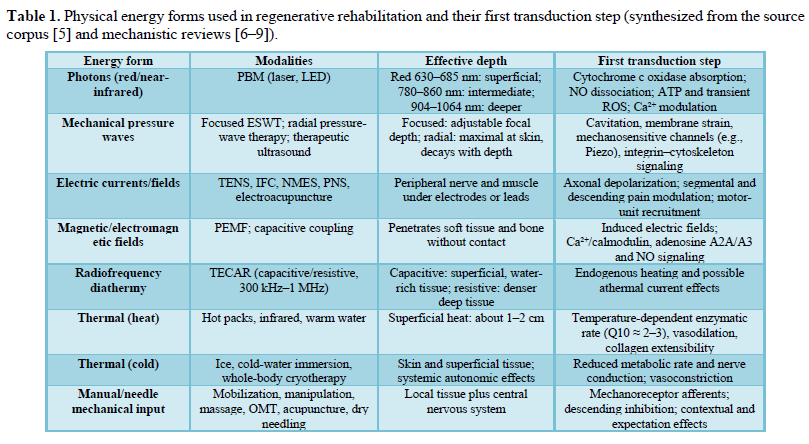
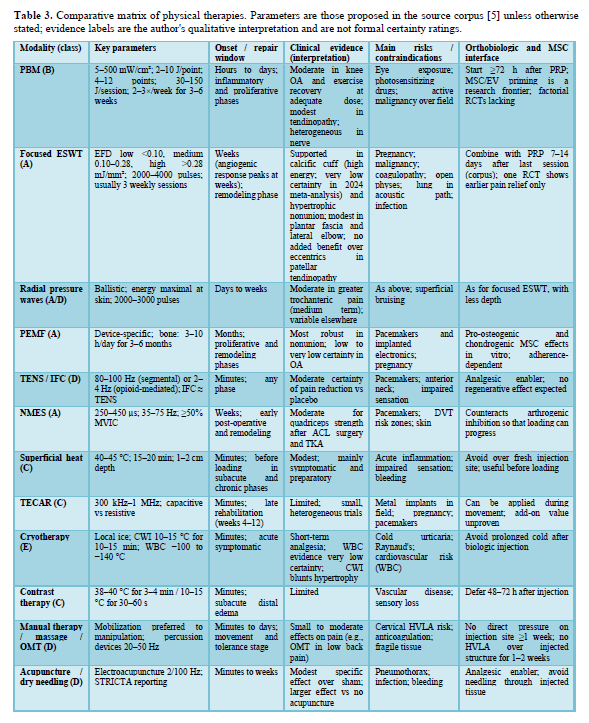
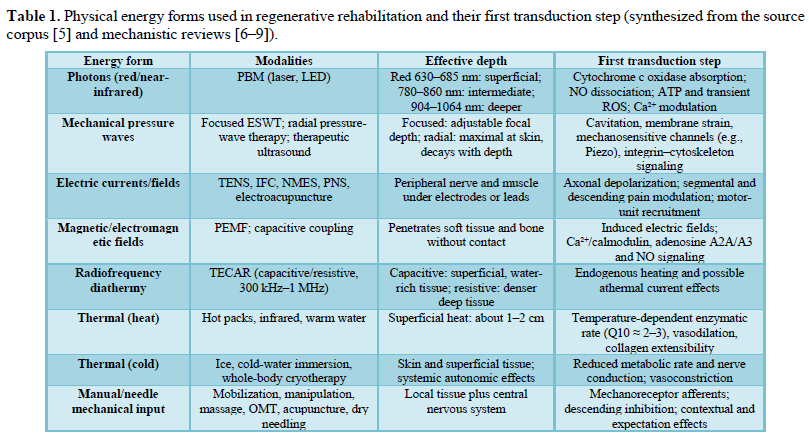
The corpus groups physical therapies by the form of energy delivered: photons (PBM), mechanical waves (focused and radial ESWT, therapeutic ultrasound), electric currents and fields (TENS, interferential current, NMES, peripheral nerve stimulation), magnetic or electromagnetic fields (PEMF, TECAR as radiofrequency diathermy), and thermal energy in either direction (superficial heat, cryotherapy, contrast) [5]. Manual and needle-based interventions add mechanical input with a large neurophysiological and contextual component [6]. Table 1 summarizes the physical characteristics of each energy form and its first transduction step.
Despite these physical differences, the downstream signaling converges. Photon absorption by cytochrome c oxidase leads to nitric oxide dissociation, increased ATP, a brief burst of reactive oxygen species and modulation of calcium [7]. Shockwaves and pressure waves act through cavitation and membrane strain, opening mechanosensitive channels and inducing nitric oxide synthase, vascular endothelial growth factor and growth factor release [8,10]. PEMF is thought to act on calcium/calmodulin and adenosine receptor signaling [9]. Heat raises enzymatic rate and perfusion. The corpus therefore treats calcium and nitric oxide as a shared node through which several modalities act [5]. This convergence has a practical corollary. When two modalities act mainly through the same node at the same time, the second may add cost without adding biology.
A functional taxonomy
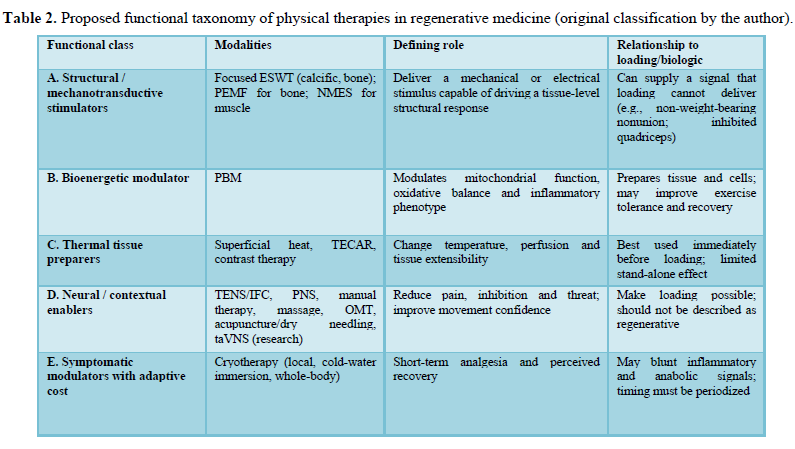
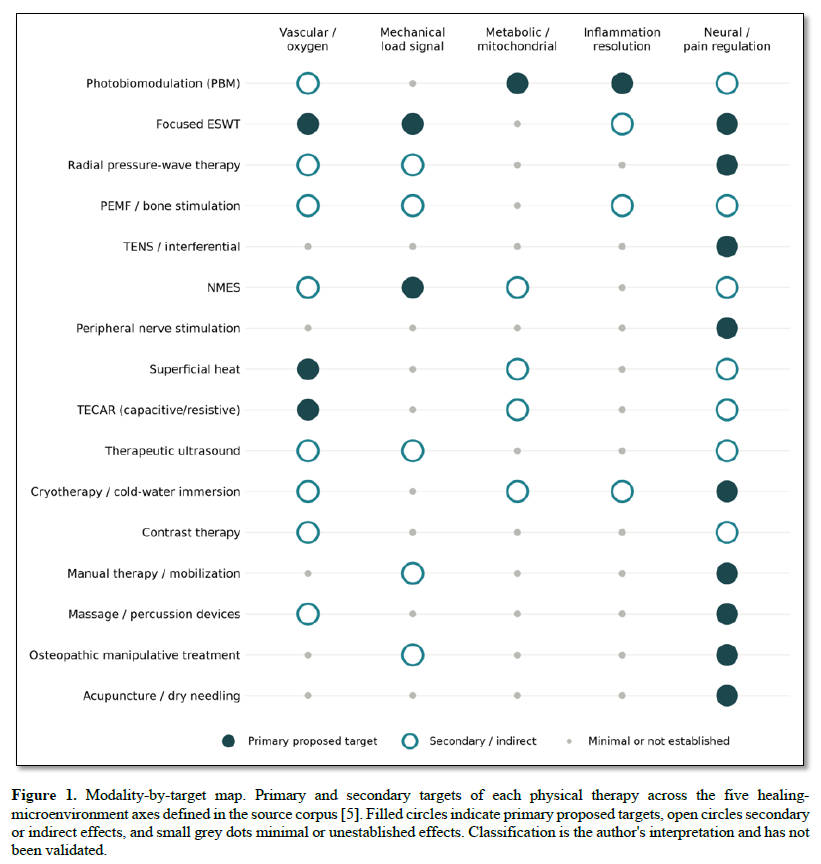
Grouping modalities by device type (laser, shockwave, electrical) does not predict clinical role. We therefore propose a functional taxonomy based on the primary biological axis targeted and on the relationship of each modality to the main regenerative stimulus, which is progressive mechanical loading with or without an orthobiologic (Table 2; Figure 1).
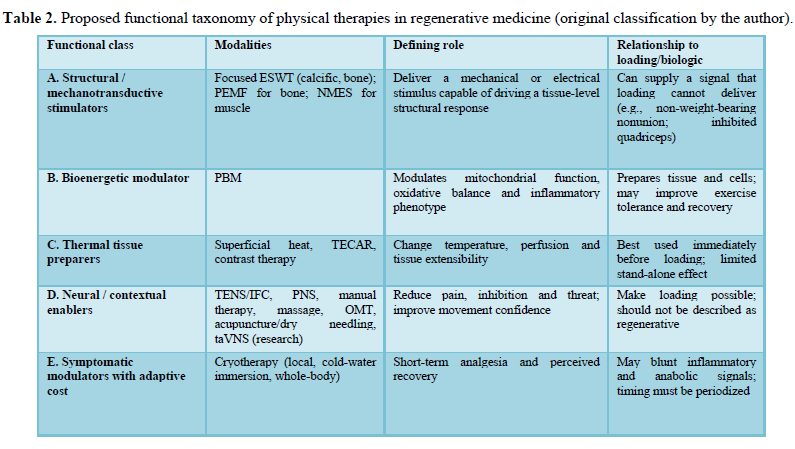
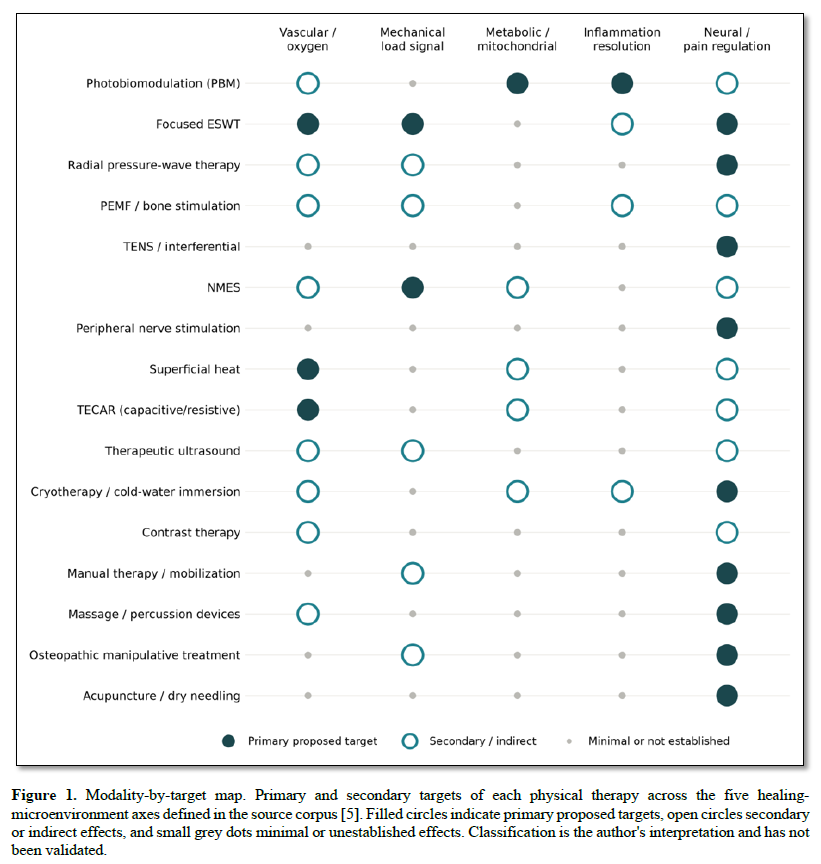
Two features of the taxonomy deserve emphasis. First, only the structural/mechanotransductive class delivers a stimulus that, by itself, can plausibly initiate a tissue-level repair response, as with ESWT in calcific tendinopathy or nonunion and PEMF in bone. Even in this class, the corpus positions the modality as an adjunct to loading rather than a replacement [5]. Second, the largest class, neural/contextual enablers, acts mainly on pain, motor inhibition and patient experience. These are clinically valuable because they make loading possible, but they should not be described as regenerative.
Comparative matrix
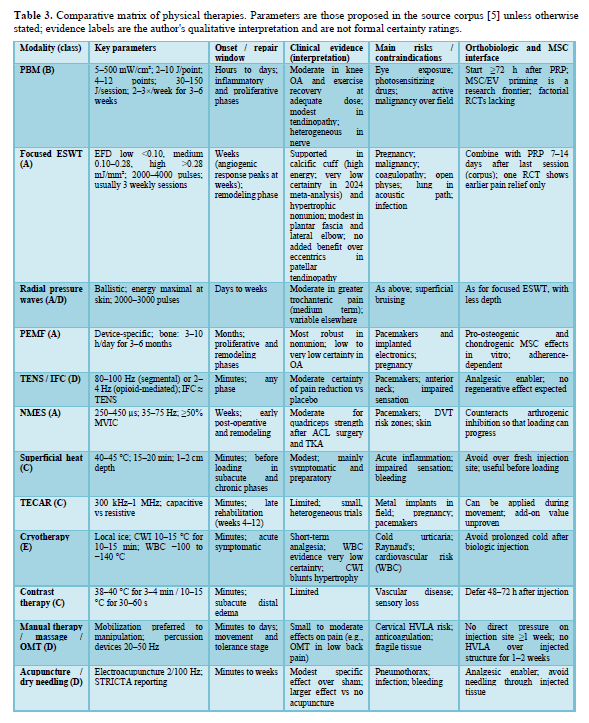
Table 3 presents the comparative matrix across the main coded dimensions. Parameter ranges are those proposed in the corpus [5] and, where indicated, in the cited trials.
Independent evidence: where it agrees and where it tempers
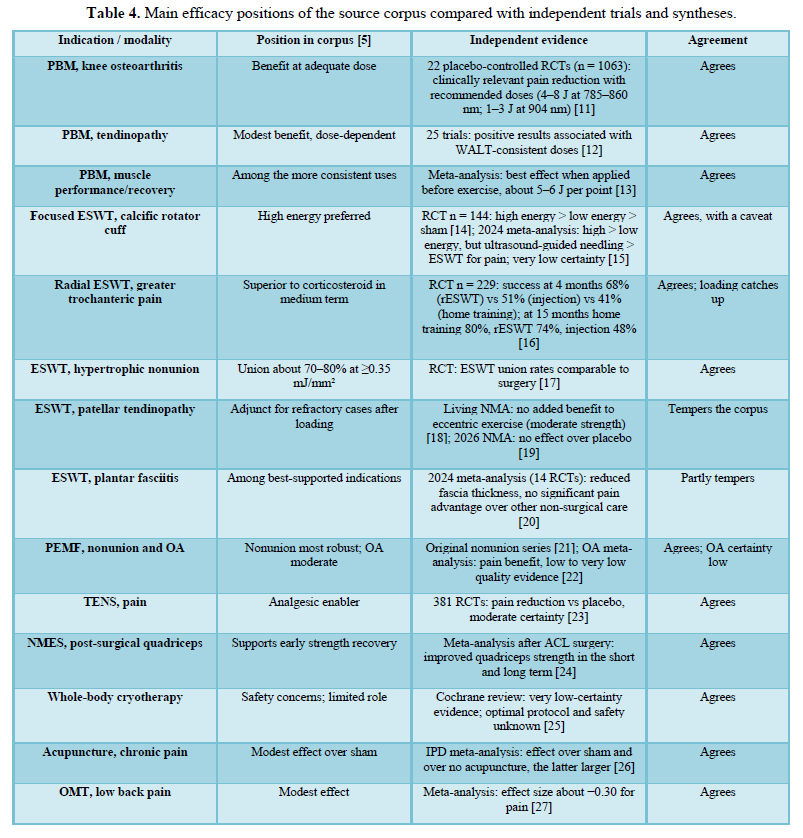
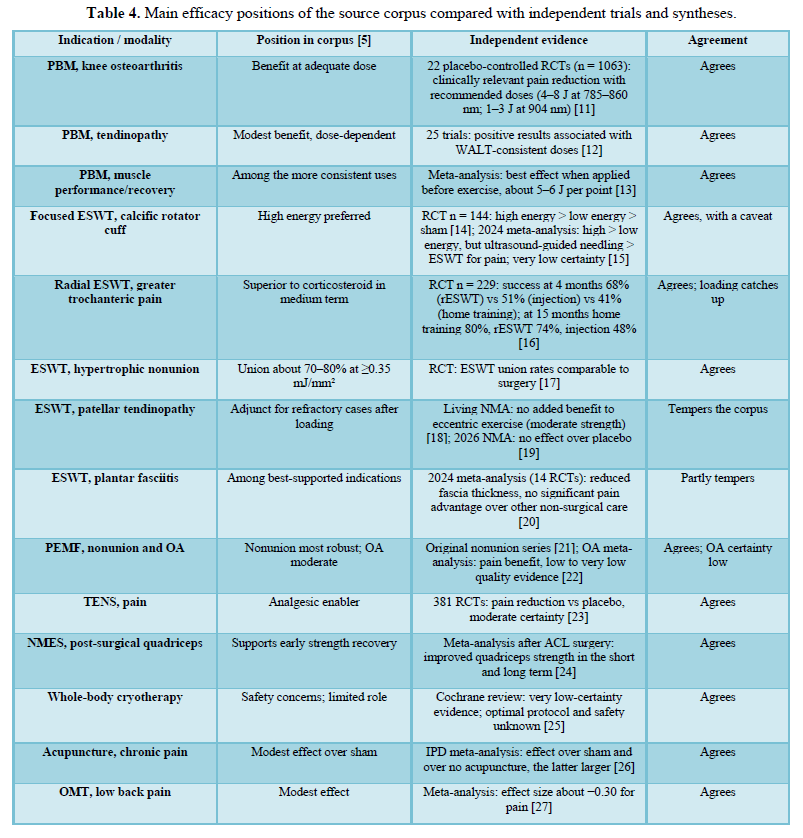
Table 4 contrasts the main efficacy positions of the corpus with independent trials and syntheses. Agreement was found for most core indications. For PBM in knee osteoarthritis, a meta-analysis of 22 placebo-controlled RCTs (n = 1063) reported clinically relevant pain reduction when recommended doses were used (4 to 8 J per point at 785 to 860 nm; 1 to 3 J at 904 nm) [11]. For tendinopathy, positive PBM trials clustered around doses consistent with World Association for Laser Therapy (WALT) recommendations [12], and pre-exercise application improved performance and recovery markers [13]. For calcific rotator cuff tendinopathy, high-energy focused ESWT outperformed low-energy and sham treatment in a randomized trial of 144 patients [14]. A 2024 meta-analysis confirmed the high- versus low-energy gradient but found that ultrasound-guided needling was superior to ESWT for pain, with very low certainty overall [15]. In greater trochanteric pain syndrome, radial ESWT outperformed corticosteroid injection and home training at 4 months, while home training caught up by 15 months [16]. In hypertrophic long-bone nonunion, ESWT achieved union rates comparable to surgery [17]. These results agree with the corpus's position that modality benefit is dose-specific and time-limited.
Independent evidence was less favorable in three places. First, in patellar tendinopathy, a living network meta-analysis found moderate-strength evidence that ESWT adds no short-term pain or function benefit when combined with eccentric exercise [18]. A 2026 network meta-analysis likewise found no significant effect of ESWT over placebo in this condition [19]. Second, for plantar fasciitis, a 2024 meta-analysis found reduced fascia thickness but no significant pain advantage over other non-surgical treatments [20]. Third, for whole-body cryotherapy, a Cochrane review found very low-certainty evidence and no established safe or effective protocol [25]. Evidence for TECAR also remains preliminary, with small samples, few sham-controlled trials and variable protocols [28]. These findings support the corpus's general rule that loading comes first. They also argue for applying that rule more strictly in patellar tendinopathy than a device-led protocol might suggest.
Convergence, redundancy and the inverted-U dose curve
Two cross-cutting properties emerged from the comparison. The first is convergence: PBM, ESWT, PEMF, heat and, to a lesser extent, electrical stimulation all modulate calcium handling, nitric oxide availability and perfusion [7–9]. When the target is the same node, adding a second modality is more likely to be redundant than synergistic. The corpus notes that adding TECAR, PEMF or neuromodulation to an already adequate program of ESWT or PBM plus loading rarely adds measurable benefit [5]. The second is biphasic dosing. PBM has a well-described Arndt–Schulz-type biphasic response, in which low fluence stimulates and high fluence inhibits [29]. Similar inverted-U behavior is visible in MSC studies of PBM [30] and in the energy dependence of ESWT effects on progenitor cells [10]. Mechanical loading itself has a therapeutic window bounded by under-stimulation and overload [2]. A practical inference is that stacking modalities increases total delivered dose and may move tissue beyond the stimulatory window, especially early after injection.
The stem cell and orthobiologic interface
Preclinical data show that several modalities can modify MSC behavior. PBM increases MSC proliferation, migration and, depending on parameters and cell source, differentiation [30]. ESWT enhances proliferation, migration and homing of bone marrow and adipose-derived progenitors and has been used as a preconditioning strategy [8]. PEMF promotes osteogenic and chondrogenic differentiation of MSCs through BMP/TGF-β, adenosine and mTOR pathways [9,10]. These data justify research into using physical energy to prime cells ex vivo or condition the recipient site in vivo. However, they do not establish clinical benefit when a modality is added to an injected cell or platelet product.
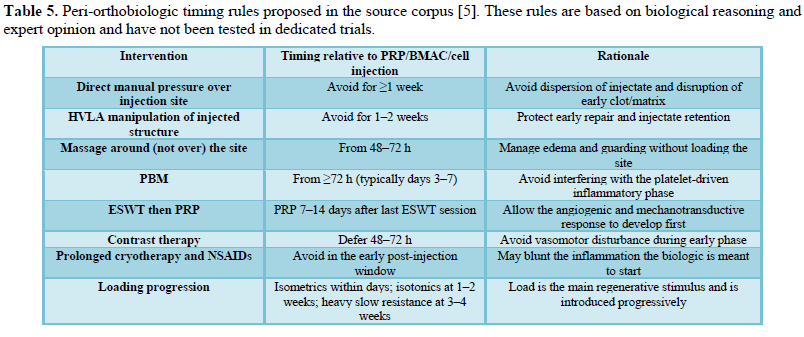
Direct clinical evidence for combinations remains sparse. In an RCT of 33 athletes with chronic patellar tendinopathy, adding a focused ESWT session to PRP accelerated pain relief at 1 month, with no between-group differences at 1 year [31]. For PBM plus PRP or BMAC, the corpus identifies no adequately powered factorial trial and treats the combination as a research question [5]. Timing therefore relies on biological reasoning rather than outcome data. Table 5 summarizes the peri-injection timing rules proposed in the corpus. Their common logic is to protect the early platelet- and cell-driven inflammatory cascade, avoid mechanical dispersion of the injectate, and introduce loading progressively.
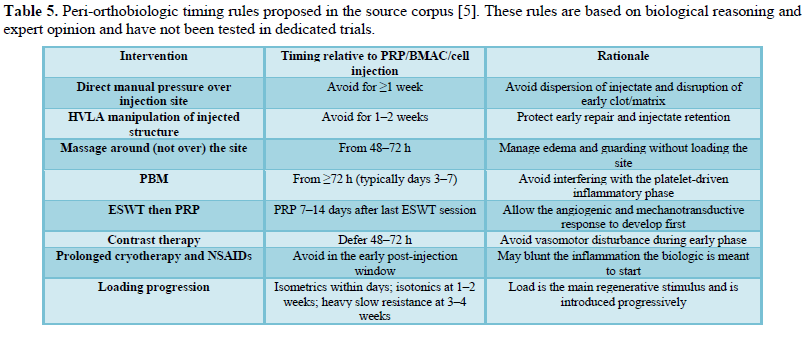
The cold rule deserves specific mention. Post-exercise cold-water immersion attenuated anabolic signaling and long-term hypertrophy in a controlled training study [32], and the PEACE and LOVE framework advises against reflexive anti-inflammatory strategies in the acute phase of soft-tissue injury [33]. By analogy, prolonged cold after a biologic injection may blunt the inflammatory phase that the biologic is designed to start. The corpus applies the same reasoning to non-steroidal anti-inflammatory drugs [5]. This analogy is plausible but has not been tested in trials of orthobiologic outcomes.
Stage-by-modality map
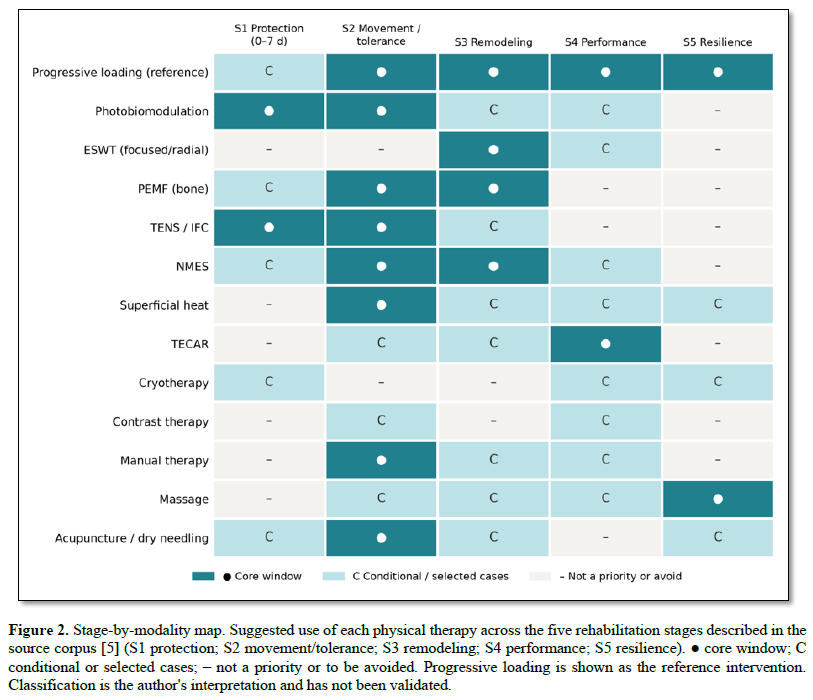
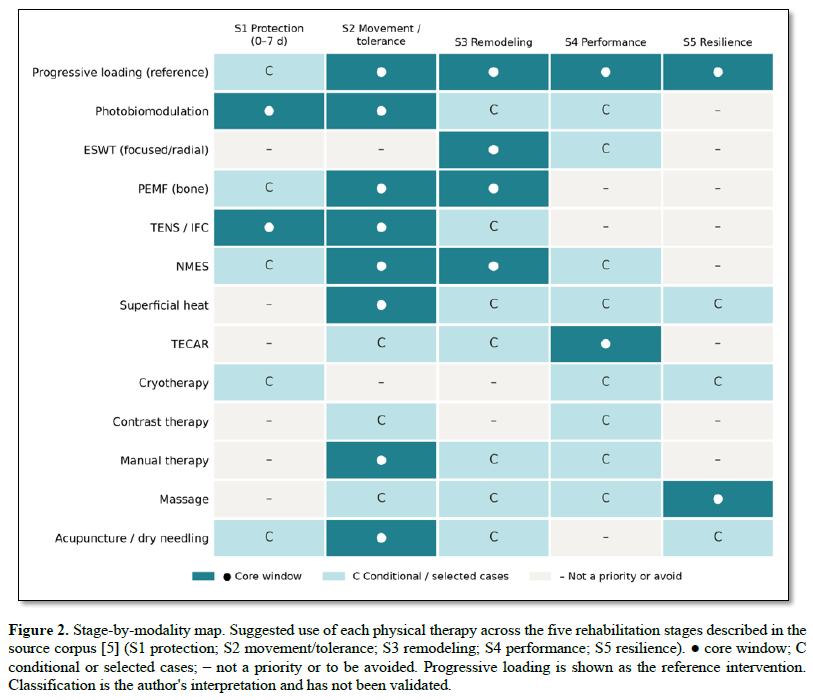
The corpus organizes rehabilitation into five stages: protection, movement and tolerance, remodeling, performance, and resilience [5]. Figure 2 maps each modality to these stages. Progressive loading is the only intervention present in every stage after protection. Neural/contextual enablers are concentrated in stages 1 and 2, where pain and inhibition limit loading. Structural stimulators are concentrated in stage 3, after a loading program has been established. Thermal preparers are most useful in stages 2 and 4, where they prepare tissue before loading.
Decision rules and the essentiality test
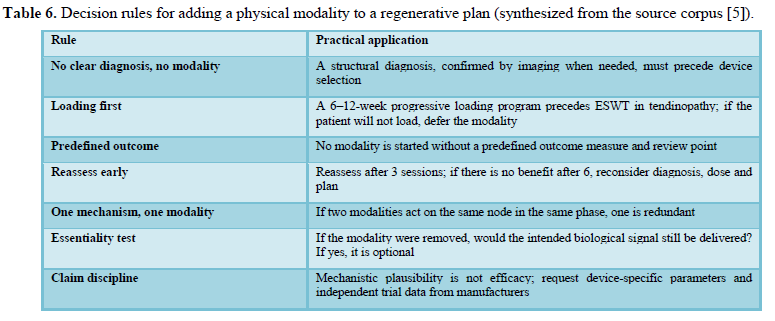
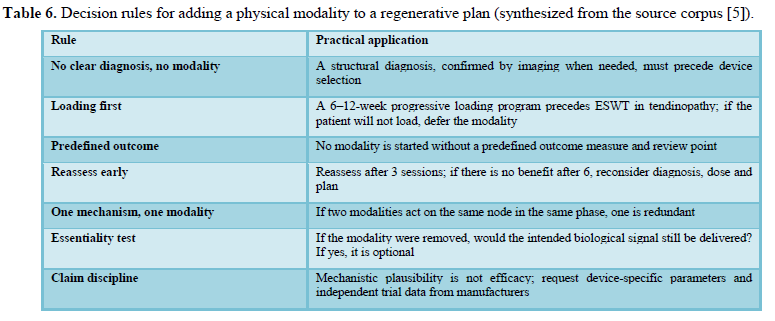
Across modalities, the corpus applies a consistent set of decision rules (Table 6). We summarize them here as an essentiality test: if the modality were removed, would the intended biological signal still be delivered? If the answer is yes, because loading and the biologic already provide it, the modality is optional and should be justified by symptom control or adherence rather than by regenerative claims. If the answer is no, as with high-energy ESWT for calcific deposits or PEMF in a nonunion where weight-bearing is restricted, the modality has a defensible structural role.
 DISCUSSION
This comparison suggests that the most useful question about a physical therapy in regenerative medicine is not whether it "works", but which signal it adds that the main regenerative stimulus does not already provide. Organized this way, the field becomes simpler. A small number of modalities deliver a structural signal with independent clinical support for specific indications: ESWT for calcific tendinopathy, greater trochanteric pain and nonunion; PEMF for nonunion; and NMES for quadriceps strength after knee surgery [14,16,17,21,24]. One modality, PBM, acts mainly on cellular bioenergetics and inflammation, with dose-dependent support in knee osteoarthritis, tendinopathy and exercise recovery [11–13]. Most remaining modalities are enablers. Their value lies in reducing pain, inhibition or fear enough to make loading tolerable, as shown by the moderate-certainty effect of TENS on pain [23], the modest specific effect of acupuncture over sham [26] and the small-to-moderate effect of osteopathic treatment in low back pain [27].
This framing has three implications for stem cell and orthobiologic practice. First, it discourages a common pattern in which several devices are added to an injection protocol without a defined mechanism or outcome. Second, it prioritizes timing. Modalities that act on inflammation, such as cold or high-dose anti-inflammatory strategies, can conflict with the early phase that platelet and cell products are designed to start, whereas loading and structural stimulators belong to the remodeling window. Third, it identifies where research is most needed. Preclinical data on PBM, ESWT and PEMF effects on MSCs are extensive [8–10,30], but clinical data on whether these effects add to an orthobiologic in patients are almost absent. The single RCT located for ESWT added to PRP showed only a short-lived advantage [31].
The comparison also highlights a reporting problem shared by all modalities. Light-based trials often omit wavelength, irradiance, energy per point or total energy. Shockwave trials often omit energy flux density, device type or focal depth. PEMF studies frequently omit waveform, flux density or daily exposure. Without these parameters, negative and positive trials cannot be compared, and dose-response curves cannot be built. We therefore propose that trials combining a physical modality with an orthobiologic report, at minimum: (i) full physical dose parameters; (ii) timing relative to injection; (iii) the concurrent loading program; (iv) a predefined primary outcome and minimal clinically important difference; and (v) a sham or attention control for the modality.
Claim limits and device governance
The comparison also has implications for how physical therapies are described to patients and in commercial material. Loading remains the reference intervention: heavy-load eccentric training established it as first-line care in chronic Achilles tendinopathy [34], and the independent syntheses reviewed here repeatedly found that devices add little once an adequate loading program is in place [18]. The corpus recommends that clinicians ask manufacturers for device-specific physical parameters, independent controlled trials in the target indication and disclosure of conflicts of interest, and that mechanistic plausibility not be presented as clinical efficacy [5]. In the context of stem cell and orthobiologic practice, this means that terms such as regenerative, stem cell-activating or exosome-boosting should be reserved for effects shown in humans at the doses used, not inferred from in vitro data.
Research agenda
Three study designs would resolve most of the uncertainty identified here. First, a 2 × 2 factorial RCT (biologic versus saline, modality versus sham, all with standardized progressive loading) would separate the main effects and the interaction of the modality and the biologic. Second, an add-on design for refractory cases, in which patients who have not responded to 6 to 12 weeks of standardized loading are randomized to modality or sham, would test the incremental value claimed in practice. Third, mechanistic sub-studies using imaging, biomarkers or tissue sampling would test whether modality-induced changes in MSC behavior seen in vitro occur in vivo at clinically used doses. Where cells are primed ex vivo, the priming dose should be specified as rigorously as the cell dose.
LIMITATIONS
This review has important limitations. Its primary corpus is a clinical guide written by the author of this review, which creates a risk of confirmation bias. We mitigated this by checking key statements against independent trials and meta-analyses and by reporting where they disagreed. The comparison is narrative and not systematic. Evidence labels and the classifications shown in Table 3 and in Figures 1 and 2 are the author's qualitative interpretation and have not been validated. The external verification was targeted rather than exhaustive and may have missed relevant trials. Finally, the timing rules in Table 5 derive from biological reasoning and expert opinion rather than from trials designed to test them.
CONCLUSION
Physical therapies used with stem cell and orthobiologic treatments fall into five functional classes. Only a minority deliver a structural signal with independent clinical support. Most act as bioenergetic modulators, tissue preparers or neural and contextual enablers whose main value is to make progressive loading possible. Shared signaling nodes and biphasic dose responses mean that combining modalities is often redundant and sometimes counterproductive, especially in the early post-injection window. An essentiality test, explicit timing rules, standardized reporting of physical parameters and factorial add-on trials offer a practical way to reduce overclaiming and to identify where physical energy adds to regenerative biology.
DECLARATIONS
Acknowledgements: None.
Author contributions: M.K. conceived the review, developed the source corpus, designed the comparative framework, interpreted the evidence, and drafted and all authors approved the final manuscript.
Funding: No specific funding was received for this work.
Conflict of interest: The author wrote the clinical guide used as the primary source corpus for this review [5]. There is no financial relationships with manufacturers or distributors of photobiomodulation, shockwave, electromagnetic, radiofrequency or other devices, or with orthobiologic products
Ethics approval and consent: Not applicable. This review involves no human participants, animals or patient data.
Data availability: No new data were generated. The coding matrix underlying Tables 2 to 6 and Figures 1 and 2 is available from the author on reasonable request.
Use of AI-assisted tools: An AI-based writing assistant was used to help structure the comparison, check references against public bibliographic records and edit the language. The author reviewed and verified all content and takes full responsibility for the manuscript.
- Ambrosio F, et al. The emerging relationship between regenerative medicine and physical therapeutics. Phys Ther. 2010;90(12):1807-14. doi:10.2522/ptj.20100030. Available from: https://pmc.ncbi.nlm.nih.gov/articles/PMC2996510/
- Khan KM, Scott A. Mechanotherapy: how physical therapists' prescription of exercise promotes tissue repair. Br J Sports Med. 2009;43(4):247-52. Available from: https://pubmed.ncbi.nlm.nih.gov/19244270/
- Engler AJ, Sen S, Sweeney HL, Discher DE. Matrix elasticity directs stem cell lineage specification. Cell. 2006;126(4):677-89. doi:10.1016/j.cell.2006.06.044. Available from: https://pubmed.ncbi.nlm.nih.gov/16923388/
- Dupont S, Morsut L, Aragona M, et al. Role of YAP/TAZ in mechanotransduction. Nature. 2011;474(7350):179-83. doi:10.1038/nature10137. Available from: https://pubmed.ncbi.nlm.nih.gov/21654799/
- Kume M. Physical Therapies in Regenerative Medicine: A Clinical Guide to Photobiomodulation, Shockwave Therapy, Electromagnetic Fields, Thermal Modalities, and Manual Interventions. 1st ed. Author's edition; 2026. 159 p. [Place of publication, publisher and ISBN to be completed before submission.]
- Bialosky JE, et al. The mechanisms of manual therapy in the treatment of musculoskeletal pain: a comprehensive model. Man Ther. 2009;14(5):531-8. Available from: https://pmc.ncbi.nlm.nih.gov/articles/PMC2775050/
- Hamblin MR. Mechanisms and applications of the anti-inflammatory effects of photobiomodulation. AIMS Biophys. 2017;4(3):337-61. doi:10.3934/biophy.2017.3.337. Available from: https://www.aimspress.com/article/10.3934/biophy.2017.3.337
- Kou D, Chen Q, Wang Y, et al. The application of extracorporeal shock wave therapy on stem cells therapy to treat various diseases. Stem Cell Res Ther. 2024;15:271. doi:10.1186/s13287-024-03888-w. Available from: https://pmc.ncbi.nlm.nih.gov/articles/PMC11346138/
- Varani K, Vincenzi F, Pasquini S, et al. Pulsed electromagnetic field stimulation in osteogenesis and chondrogenesis: signaling pathways and therapeutic implications. Int J Mol Sci. 2021;22(2):809. doi:10.3390/ijms22020809. Available from: https://pmc.ncbi.nlm.nih.gov/articles/PMC7830993/
- Viganò M, Sansone V, d'Agostino MC, et al. Mesenchymal stem cells as therapeutic target of biophysical stimulation for the treatment of musculoskeletal disorders. J Orthop Surg Res. 2016;11:163. doi:10.1186/s13018-016-0496-5. Available from: https://pmc.ncbi.nlm.nih.gov/articles/PMC5162101/
- Stausholm MB, et al. Efficacy of low-level laser therapy on pain and disability in knee osteoarthritis: systematic review and meta-analysis of randomised placebo-controlled trials. BMJ Open. 2019;9(10):e031142. Available from: https://pmc.ncbi.nlm.nih.gov/articles/PMC6830679/
- Tumilty S, et al. Low level laser treatment of tendinopathy: a systematic review with meta-analysis. Photomed Laser Surg. 2010;28(1):3-16. Available from: https://pubmed.ncbi.nlm.nih.gov/19708800/
- Leal-Junior EC, et al. Effect of phototherapy (low-level laser therapy and light-emitting diode therapy) on exercise performance and markers of exercise recovery: a systematic review with meta-analysis. Lasers Med Sci. 2015;30(2):925-39. Available from: https://pubmed.ncbi.nlm.nih.gov/24249354/
- Gerdesmeyer L, et al. Extracorporeal shock wave therapy for the treatment of chronic calcifying tendonitis of the rotator cuff: a randomized controlled trial. JAMA. 2003;290(19):2573-80. Available from: https://pubmed.ncbi.nlm.nih.gov/14625334/
- Brindisino F, Marruganti S, Lorusso D, et al. The effectiveness of extracorporeal shock wave therapy for rotator cuff calcific tendinopathy: a systematic review with meta-analysis. Physiother Res Int. 2024;29(3):e2106. doi:10.1002/pri.2106. Available from: https://pubmed.ncbi.nlm.nih.gov/38878302/
- Rompe JD, et al. Home training, local corticosteroid injection, or radial shock wave therapy for greater trochanter pain syndrome. Am J Sports Med. 2009;37(10):1981-90. Available from: https://journals.sagepub.com/doi/10.1177/0363546509334374
- Cacchio A, et al. Extracorporeal shock-wave therapy compared with surgery for hypertrophic long-bone nonunions. J Bone Joint Surg Am. 2009;91(11):2589-97. Cited via: https://pmc.ncbi.nlm.nih.gov/articles/PMC10280326/
- Challoumas D, Crosbie G, O'Neill S, Pedret C, Millar NL. Effectiveness of exercise treatments with or without adjuncts for common lower limb tendinopathies: a living systematic review and network meta-analysis. Sports Med Open. 2023;9:71. doi:10.1186/s40798-023-00616-1. Available from: https://pmc.ncbi.nlm.nih.gov/articles/PMC10409676/
- Guo NY, Wang SQ, Liu W, et al. The effect of extracorporeal shockwave therapy in tendinopathy: a systematic review and network meta-analysis of randomized controlled trials. Orthop Surg. 2026;18(10). doi:10.1111/os.70408. Available from: https://onlinelibrary.wiley.com/doi/full/10.1111/os.70408
- Simental-Mendía M, Simental-Mendía LE, Sánchez-García A, et al. Effect of extracorporeal shockwave therapy on plantar fascia thickness in plantar fasciitis: a systematic review and meta-analysis of randomized controlled trials. Arch Orthop Trauma Surg. 2024;144:3503-16. Available from: https://link.springer.com/article/10.1007/s00402-024-05464-6
- Bassett CA, Mitchell SN, Gaston SR. Pulsing electromagnetic field treatment in ununited fractures and failed arthrodeses. JAMA. 1982;247(5):623-8. Available from: https://jamanetwork.com/journals/jama/article-abstract/367355
- Yang X, et al. Effects of pulsed electromagnetic field therapy on pain, stiffness, physical function, and quality of life in patients with osteoarthritis: a systematic review and meta-analysis of randomized placebo-controlled trials. Phys Ther. 2020;100(7):1118-31. Available from: https://academic.oup.com/ptj/article/100/7/1118/5816580
- Johnson MI, et al. Efficacy and safety of transcutaneous electrical nerve stimulation (TENS) for acute and chronic pain in adults: a systematic review and meta-analysis of 381 studies (the meta-TENS study). BMJ Open. 2022;12(2):e051073. Available from: https://pubmed.ncbi.nlm.nih.gov/35144946/
- Li Z, Jin L, Chen Z, et al. Effects of neuromuscular electrical stimulation on quadriceps femoris muscle strength and knee joint function in patients after ACL surgery: a systematic review and meta-analysis of randomized controlled trials. Orthop J Sports Med. 2025;13(1):23259671241275071. doi:10.1177/23259671241275071. Available from: https://pmc.ncbi.nlm.nih.gov/articles/PMC11729445/
- Costello JT, Baker PRA, Minett GM, et al. Whole-body cryotherapy (extreme cold air exposure) for preventing and treating muscle soreness after exercise in adults. Cochrane Database Syst Rev. 2015;(9):CD010789. doi:10.1002/14651858.CD010789.pub2. Available from: https://www.cochranelibrary.com/cdsr/doi/10.1002/14651858.CD010789.pub2/information
- Vickers AJ, et al. Acupuncture for chronic pain: update of an individual patient data meta-analysis. J Pain. 2018;19(5):455-74. Available from: https://pubmed.ncbi.nlm.nih.gov/29198932/
- Licciardone JC, et al. Osteopathic manipulative treatment for low back pain: a systematic review and meta-analysis of randomized controlled trials. BMC Musculoskelet Disord. 2005;6:43. Available from: https://pubmed.ncbi.nlm.nih.gov/16080794/
- Lupowitz LG, Ramus L, Delacour F, Johnson K. TECAR therapy: a clinical commentary on its evolution, application, and future in rehabilitation. Int J Sports Phys Ther. 2025;20(4):632-40. doi:10.26603/001c.130909. Available from: https://pmc.ncbi.nlm.nih.gov/articles/PMC11964684/
- Huang YY, Chen AC, Carroll JD, Hamblin MR. Biphasic dose response in low level light therapy. Dose Response. 2009;7(4):358-83. doi:10.2203/dose-response.09-027.Hamblin. Available from: https://journals.sagepub.com/doi/10.2203/dose-response.09-027.Hamblin
- Ahrabi B, Rezaei Tavirani M, Khoramgah MS, et al. The effect of photobiomodulation therapy on the differentiation, proliferation, and migration of the mesenchymal stem cell: a review. J Lasers Med Sci. 2019;10(Suppl 1):S96-S103. doi:10.15171/jlms.2019.S17. Available from: https://pmc.ncbi.nlm.nih.gov/articles/PMC6983866/
- Jhan SW, Wu KT, Chou WY, et al. A comparative analysis of platelet-rich plasma alone versus combined with extracorporeal shockwave therapy in athletes with patellar tendinopathy and knee pain: a randomized controlled trial. Knee Surg Relat Res. 2024;36:47. doi:10.1186/s43019-024-00252-3. Available from: https://pmc.ncbi.nlm.nih.gov/articles/PMC11650825/
- Roberts LA, et al. Post-exercise cold water immersion attenuates acute anabolic signalling and long-term adaptations in muscle to strength training. J Physiol. 2015;593(18):4285-301. Available from: https://pubmed.ncbi.nlm.nih.gov/26174323/
- Dubois B, Esculier JF. Soft-tissue injuries simply need PEACE and LOVE. Br J Sports Med. 2020;54(2):72-3. Available from: https://pubmed.ncbi.nlm.nih.gov/31377722/
- Alfredson H, et al. Heavy-load eccentric calf muscle training for the treatment of chronic Achilles tendinosis. Am J Sports Med. 1998;26(3):360-6. Available from: https://pubmed.ncbi.nlm.nih.gov/9617396/
-
 Table 1
-
Table 2
-
Table 3
-
Table 4
-
Table 5
-
Table 6
QUICK LINKS
- SUBMIT MANUSCRIPT
- RECOMMEND THE JOURNAL
-
SUBSCRIBE FOR ALERTS
RELATED JOURNALS
- Dermatology Clinics and Research (ISSN:2380-5609)
- International Journal of Anaesthesia and Research (ISSN:2641-399X)
- Journal of Clinical Trials and Research (ISSN:2637-7373)
- Journal of Spine Diseases
- Oncology Clinics and Research (ISSN: 2643-055X)
- Journal of Alcoholism Clinical Research
- Journal of Immunology Research and Therapy (ISSN:2472-727X)