

8
Views & Citations10
Likes & Shares
Substance misuse is an increasingly pressing concern, since stimulants and alcohol are known to induce cardiac stress, arrhythmias, and other cardiovascular problems [6]. Such effects are especially worrying for young adults, whose still-developing physiology may leave them more vulnerable to this kind of damage. Students in tertiary institutions face a heightened risk of substance misuse because of overlapping social, environmental, and psychological pressures. Easy access to substances, combined with the pressures of academic life and social integration, creates conditions that favour experimentation and habitual use [7]. Research points to a growing pattern of substance use among students in Edo State, with cannabis and alcohol emerging as the substances most commonly used [8].
Within undergraduate students in higher institutions, substance abuse has grown into a serious public-health concern, with rising incidence recorded in Edo State, Nigeria. Frequently abused substances such as alcohol, cannabis, and stimulants have been linked in various studies to cardiovascular complications, including arrhythmias and cardiomyopathy. However, a lack of locally generated data on how these substances affect cardiac markers in undergraduate students within Edo State has been noted [6, 8], underscoring the need for research conducted specifically within this demographic. A considerable gap therefore exists in the understanding of the prevalence, patterns of use, and cardiac effects of the abuse of substance among undergraduate students in Edo State, and this gap constrains the development of targeted interventions. Although alcohol and cannabis are known to be associated with cardiac stress and damage, the way their use patterns relate to cardiac markers in this specific population remains largely unexplored [9, 10]. Understanding how substance use affects the cardiovascular health of students in Edo State therefore calls for research conducted locally, since addressing the effect of substance misuse on heart health is essential to safeguarding the wellbeing of Nigeria's undergraduate population [10]. Knowledge remains scarce regarding the prevalence, trends, and cardiac consequences of substance misuse among students in Edo State. This study was therefore carried out to establish any association between substance abuse and heart damage, generating evidence-based information to guide policy, health education, and preventive measures in higher institutions, effective control of which is important for lowering the effects of substance abuse to protect the health of young adults in Edo State.
This study aimed to assess how substance abuse affects cardiac markers (troponin C, troponin I, and troponin T) among undergraduate students in a tertiary institution in Edo State, Nigeria.
MATERIALS AND METHODS
Area of Study
This research was carried out at Ambrose Alli University (AAU), a state-owned institution founded in 1981 and situated in Ekpoma, headquarters of Esan West Local Government Area in Edo State, South-South Nigeria [11]. Ekpoma is a fast-growing town populated mainly by the Esan people, and the university's presence has made it a notable educational and commercial hub. Current estimates put Edo State's population at roughly 7.25 million, while Ekpoma town has about 290,000 inhabitants [12]. Residents in the area are engaged mainly in small-scale farming (yam, cassava, oil palm), trading, transportation, civil service, and work connected to the university [13].
Research Design
A case-control design was used, comparing undergraduate substance users against non-users. A total number of 200 participants was adopted for the study, comprising of one hundred (100) undergraduate students with a history of substance abuse who served as test subjects and one hundred (100) non-users who served as controls. Participants were grouped into substance users (subjects) and non-users (controls) according to self-reported use of substances such as alcohol, caffeine, tobacco/cigarettes, tramadol, cannabis, stimulants, and other illicit drugs. Data collection combined a structured questionnaire with biochemical analysis of the cardiac biomarkers troponin I, C, and T. The study spanned six months, from January to June 2025, and was conducted at a tertiary hospital in Edo State, Nigeria.
Ethical Approval and Informed Consent
Approval to sample participants was granted by the Ambrose Alli University Ethics Committee. Before any samples were collected, every participant received a clear explanation of the study's purpose and the procedures involved.
Inclusion and Exclusion Criteria
Subjects aged 18 years or older, and available during the data collection period. Only those who gave written informed consent, completed the questionnaire in full, and agreed to blood sample collection for cardiac biomarker analysis were included in the study. While, subjects below 18 years, those who declined or withdrew consent, students with pre-existing cardiovascular conditions, chronic systemic illnesses, or on medication known to affect cardiac biomarkers, as well as those with acute infections, recent injuries, incomplete questionnaires, or who refused blood sample collection were excluded from the study.
Sample Collection
Blood samples (5 mL) were obtained through sterile venipuncture into lithium heparin bottles for cardiac biomarker testing. Each sample was labelled, then centrifuged at 5000 rpm for 5 minutes, after which the plasma was separated and stored in aliquots at 4°C until it was analysed.
LABORATORY ANALYSIS
Determination of Troponin I/C/T
Principle: The assay is a solid-phase enzyme-linked immunosorbent assay (ELISA), built around four distinct monoclonal antibodies, each targeting a separate antigenic site on the troponin molecule. Three mouse monoclonal anti-troponin (I, T, C) antibodies are immobilised on the solid phase (the microtiter wells), while the fourth is carried in the enzyme-conjugated (horseradish peroxidase) antibody solution. The test sample reacts with all four antibodies at once, so that troponin molecules become sandwiched between the solid-phase antibody and the enzyme-labelled antibody. Following a 90-minute incubation at room temperature, unbound labelled antibody is removed by washing the wells with water. Tetramethylbenzidine (TMB) reagent is then added and left to incubate for 20 minutes, producing a blue colour, and the reaction is stopped with 1N hydrochloric acid (HCl), which turns the colour yellow. The intensity of this colour is directly proportional to the troponin (I, T, C) concentration in the sample, and absorbance is read spectrophotometrically at 450 nm.
Procedure: The coated wells were fixed into the holder, after which 100 µl each of standards, specimens, and controls were dispensed into the wells, followed by 100 µl of Enzyme Conjugate Reagent. The plate was mixed thoroughly and incubated at room temperature (18-25°C) for 90 minutes. The wells were then washed five times with distilled or deionised water, 100 µl of TMB Reagent was added, and the plate was incubated for a further 20 minutes. The reaction was terminated with 100 µl of Stop Solution, the plate was gently mixed once more, and absorbance was read at 450 nm within 15 minutes. Absorbance readings were taken using a microtiter plate reader with a bandwidth of 10 nm or less and an optical-density range of 0 to 3 OD or higher, capable of reading at a 450 nm wavelength.
Reagents Used: Antibody-Coated Wells (1 plate, 96 wells) Microtiter wells coated with mouse monoclonal anti-TnI, anti TnC and anti TnT.
Reference Standard Set (1 set, 1.0 ml/vial) Contains 0, 2.0, 7.5, 30, and 75 ng/ml TnI, lyophilized.
cTnI, cTnC and cTnT Enzyme Conjugate Reagent (13 ml/vial) Contains mouse monoclonal anti-TnI anti TnC and anti TnT conjugated to horseradish peroxidase in Tris Buffer-BSA solution with preservatives.
TMB Reagent (11 ml/bottle) Contains one-step TMB solution.
Stop Solution (11 ml/bottle) Contains diluted hydrochloric acid (1N HCl).
Materials Used: Distilled or deionized water, precision pipettes: 5 µl, 10 µl, 50 µl, 100 µl and 1.0 ml, disposable pipette tips, microtiter well reader capable of reading absorbance at 450 nm, Vortex mixer, or equivalent, Absorbent paper, Cardiac Marker Tri-level Control; Cat. No. 685 (Bio-Rad Laboratories Diagnostics Group, Hercules, CA 94547).
Reagent Preparation: Prior to use, all reagents were brought to room temperature (18-25°C). Each lyophilised standard was reconstituted with 1.0 ml distilled water, then left to stand for at least 20 minutes with gentle mixing. Once reconstituted, the standards remained stable for up to 8 hours if kept sealed at 2-8°C, after which they were discarded. For longer-term stability, reconstituted standards were aliquoted and frozen at −20°C or below immediately after reconstitution, and each aliquot was frozen and thawed only once. Where Troponin I concentrations were expected to exceed 100 ng/ml, samples were diluted with the manufacturer-supplied diluent prior to quantitation.
Statistical Analysis
Results are presented in tables, with data expressed as mean ± standard deviation (S.D). Subjects and controls were compared using one-way analysis of variance (ANOVA) and the student’s t-test, with p < 0.05 taken as the threshold for statistical significance.
RESULTS
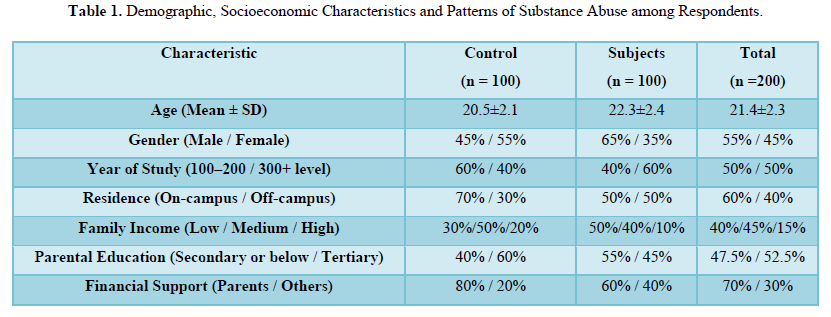
Substance abuse was found to be common among undergraduates in Edo State, Nigeria, and was closely linked to demographic, socioeconomic, and lifestyle factors with implications for cardiac health. Of the 200 respondents (100 cases and 100 controls), the mean age was 21.4 ± 2.3 years, with users being older on average (22.3 ± 2.4 years) than controls (20.5 ± 2.1 years). Males made up a larger share of users (65%) than controls (45%), and users were more likely to be in advanced academic levels (60% at 300 level and above) and to live off-campus (50%), compared with controls, 70% of whom lived on-campus. From a socioeconomic standpoint, abuse was more prevalent among students from low-income families (50%), those whose parents had secondary education or below (55%), and those relying on non-parental financial support (40%). Lifetime prevalence stood at 45.7% (91/200) and current use at 37.5% (75/200), with 55% (50/91) using weekly, 30% (27/91) monthly, and 15% (14/91) daily, mostly at social gatherings (70%, 64/91) or during examinations (25%, 23/91). The substances most commonly used were alcohol (61.5%, 56/91), tobacco/cigarettes (54.5%, 50/91), cannabis (35%, 32/91), codeine syrups (25%, 23/91), and tramadol (20%, 18/91), while 40% (36/91) reported using more than one substance. Despite high awareness of the associated risks (94.6%, 189 out of 200), users reported symptoms such as rapid heartbeat (35%), fatigue (25%), and elevated stress levels (40% relative to non-users) findings that point to widespread, socially and stress-driven abuse among males and disadvantaged students, with clear links to cardiac stress indicators (Table 1).
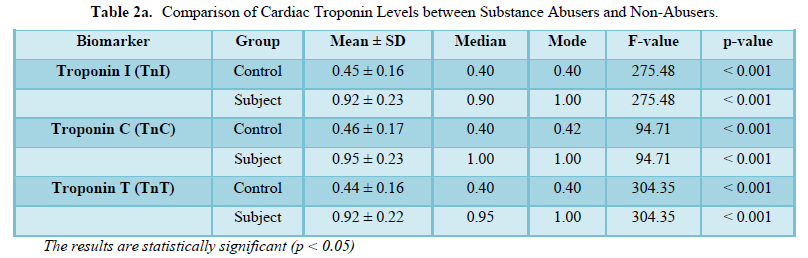
Cardiac biomarker levels were significantly higher among undergraduate substance abusers (subjects) than among non-abusers (controls) at Ambrose Alli University, Edo State, Nigeria. For Troponin I (TnI), controls recorded a mean level of 0.45 ± 0.16 ng/mL (median = 0.40, mode = 0.40), while subjects showed a considerably higher mean of 0.92 ± 0.23 ng/mL (median = 0.90, mode = 1.00) — a statistically significant difference (F = 275.48, p < 0.001). Similarly, Troponin C (TnC) concentration was elevated in subjects (0.95 ± 0.23 ng/mL; median = 1.00, mode = 1.00) relative to controls (0.46 ± 0.17 ng/mL; median = 0.40, mode = 0.42), again a significant difference (F = 94.71, p < 0.001). Troponin T (TnT) followed the same pattern, being lower in controls (0.44 ± 0.16 ng/mL; median = 0.40, mode = 0.40) than in subjects (0.92 ± 0.22 ng/mL; median = 0.95, mode = 1.00), with the difference again statistically significant (F = 304.35, p < 0.001). Since all p-values were below 0.001, well under the 0.05 threshold, the results can be considered statistically significant overall. Taken together, the levels of Troponin I, Troponin C, and Troponin T differed significantly (p < 0.05) between substance users and non-user controls, pointing to greater cardiac injury among the subjects. Absorbance readings were taken using a microtiter plate reader with a bandwidth of 10 nm or less and an optical-density range of 0 to 3 OD or higher, capable of reading at a 450 nm wavelength (Table 2a).
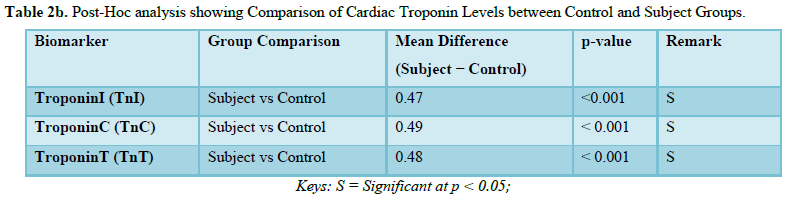
Post-hoc analysis confirmed statistically significant differences (p < 0.05) in all cardiac troponin levels between substance users (subjects) and non-user students (controls). The mean difference for Troponin I (TnI) between subjects and controls was 0.47 ng/mL (p < 0.001), while Troponin C (TnC) showed a mean difference of 0.49 ng/mL (p < 0.001), and Troponin T (TnT) a mean difference of 0.48 ng/mL (p < 0.001), between the two groups. These post-hoc results confirm that Troponin I, Troponin C, and Troponin T were all significantly higher among substance-using students than among non-users, with none of the three biomarkers showing a non-significant difference (p > 0.05). This points to a strong association between substance abuse and elevated cardiac injury markers among undergraduate students (Table 2b).
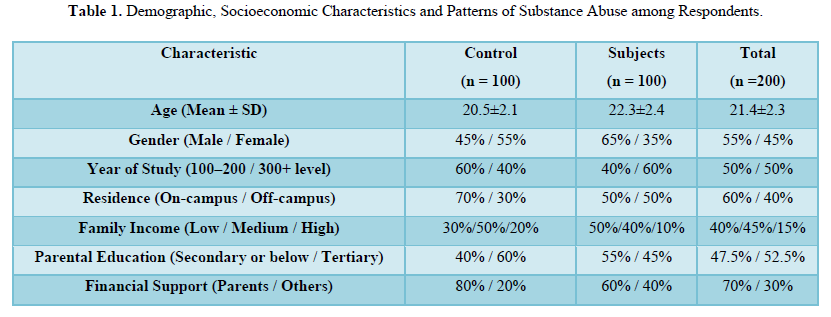
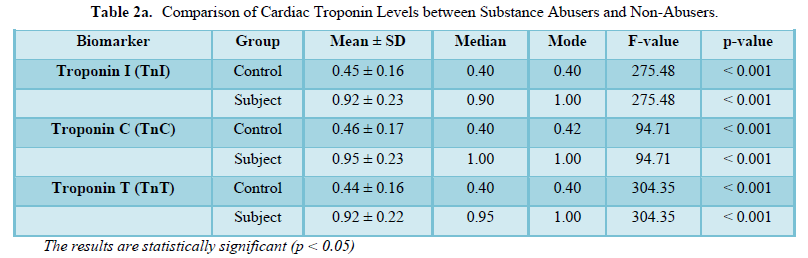
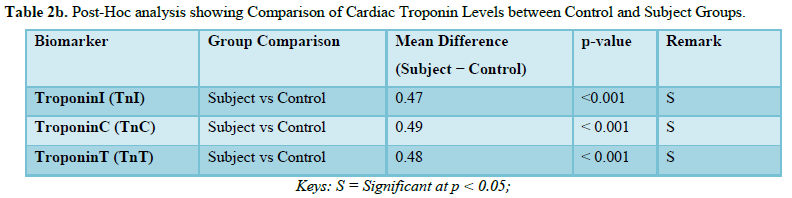
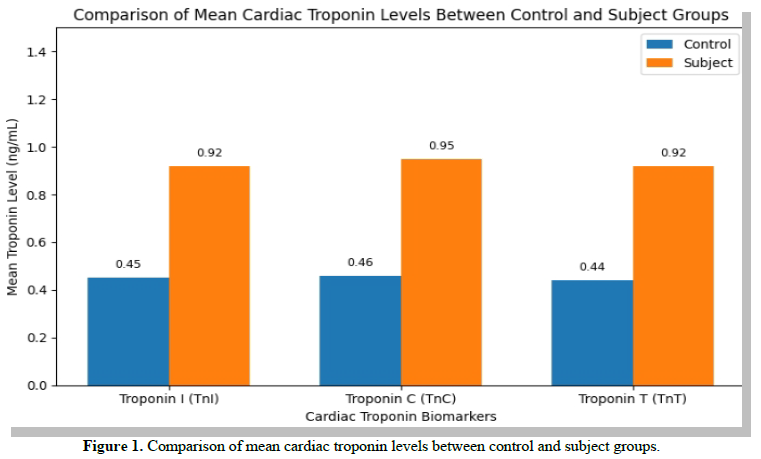
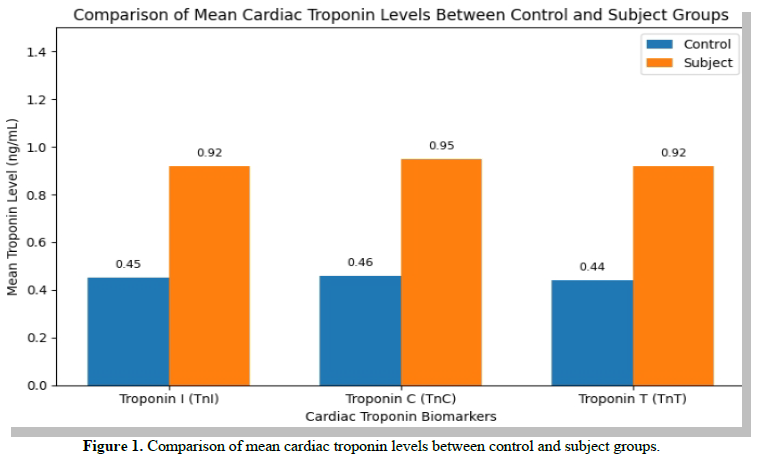
Figure 1 illustrates that all three cardiac troponins Troponin I, Troponin C, and Troponin T were higher among substance-using students than among non-users. Controls clustered around similarly low mean values across the three troponins (roughly 0.44–0.46 ng/mL), whereas the substance-abusing group showed markedly higher values (roughly 0.92–0.95 ng/mL) nearly double the levels seen in non-users. Because this pattern held consistently across all three biomarkers, it is unlikely to have arisen by chance, reinforcing the statistical findings (p < 0.001) and supporting the conclusion that substance abuse is associated with increased cardiac injury among undergraduate students.
DISCUSSION
The findings of this study show a lifetime substance-abuse prevalence of 45.7% and a current-use rate of 37.5% among undergraduates in Edo State, Nigeria meaning most respondents had used a substance at least once, while over a third had done so within the previous 30 days. Alcohol (61.5%) and tobacco (54.5%) were the substances most frequently used, followed by cannabis (35%), codeine syrups (25%), and tramadol (20%), and use was more common among males (65%), older students, those in higher academic levels, students living off-campus, and those obtaining money from sources other than their parents. This profile mirrors what other Nigerian studies have reported, where alcohol and tobacco tend to dominate substance use among university students, often driven by social pressure or stress. Our finding of 45.7% prevalence closely matches that reported by Olanrewaju [14], among undergraduates in southwestern Nigerian universities, although the specific substances differed somewhat, with alcohol (68.2%), cigarettes (59%), and cannabis (25.5%) being most common there. The high rate of polysubstance use (40%) and the role of socialisation and stress as common triggers in our study also echo the results of another study by Ajayi and Somefun [15], which recorded 24.5% lifetime and 17.5% current recreational drug abuse among Nigerian university students, again with higher prevalence among males and reduced use among those with family support (PLOS ONE). Notably, although 94.6% of our participants were aware of the health risks of substance abuse, this awareness did little to deter use: 40% of users combined more than one substance, and most used drugs at social events (70%) or during examinations (25%). Rapid heartbeat (35%) and tiredness (25%) were the symptoms most commonly reported after use. This mirrors other Nigerian studies, where students have been found to continue substance use despite exposure to awareness campaigns highlighting its dangers [16].
This study found cardiac troponin levels to be markedly higher among drug-using students than among non-users. Troponin I (0.92 ± 0.23 ng/mL versus 0.45 ± 0.16 ng/mL), Troponin C (0.95 ± 0.23 ng/mL versus 0.46 ± 0.17 ng/mL), and Troponin T (0.92 ± 0.22 ng/mL versus 0.44 ± 0.16 ng/mL) were all significantly elevated among substance abusers relative to non-users (p < 0.001 for each), with post-hoc mean differences ranging from 0.47 to 0.49 ng/mL — a pattern consistent with other studies on drug-induced cardiac biomarkers. This points to subclinical heart muscle damage in substance users who are otherwise young and asymptomatic, reinforcing the established view that troponins are sensitive indicators of cardiac stress. These findings align with the earlier work of Riley [17], who observed a link between concurrent cocaine and alcohol use (via cocaethylene) and fentanyl, which produced a 1.12- to 1.20-fold rise in high-sensitivity Troponin I over time in susceptible women, suggestive of myocardial injury (Drug and Alcohol Dependence). Similarly, the varying degrees of troponin elevation seen across our substance-abusing population resemble the findings of Porras-Perales [18], who reported higher Troponin T in cocaine-use-disorder patients and higher Troponin I in alcohol-use-disorder patients during abstinence, tied to disorder severity and inflammation (Scientific Reports). Our results are also consistent with Nway [19], who documented a case of cannabis abuse in a young adult with markedly elevated troponin (up to 1234.2 ng/mL) attributed to demand ischemia and vasospasm that resolved after discontinuation. The elevated cardiac risk implied by our findings is further supported by DeFilippis [20], who found cocaine and/or marijuana use in 10.7% of young myocardial-infarction patients, associated with a twofold increase in all-cause and cardiovascular mortality risk. The near-doubling of troponin levels observed among users in this study is most plausibly attributable to the adverse effects of alcohol and tobacco, which are known to weaken heart muscle chronically and promote hypertension and arrhythmia through oxidative damage and impaired vascular function.
Alcohol acts directly on the heart, while tobacco raises the likelihood of blood clotting; both effects can drive troponin elevation even in the absence of a heart attack, a pattern also documented in studies of heavy substance users [21].
The picture is further complicated by the fact that several of the substances involved independently induce vasospasm, rapid heartbeat, and added cardiac strain, all of which can trigger troponin release. Cannabis, for instance, can cause transient vasospasm and troponin elevation, while opioids such as codeine and tramadol carry an added risk of troponin elevation through unregulated changes in heart rate [22]. Combining substances, as reported by 40% of users in this study, appears to compound the damage to heart muscle through the cumulative effects of multiple drugs, consistent with research showing that polysubstance use is associated with rising troponin and greater risk of heart disease [17]. Interestingly, the pattern of troponin elevation seen here parallels that observed in asphyxiated newborns. Nwankwo [23], studying term neonates with hypoxic-ischaemic encephalopathy (HIE) at Enugu State University Teaching Hospital, found median serum troponin I markedly higher in asphyxiated infants (0.56 ng/mL) than in healthy infants (0.50 ng/mL; p=0.001), rising further with HIE severity (stages II and III exceeding stage I, with a positive correlation of rs=0.505, p<0.001) (Nigerian Journal of Clinical Practice).
By comparison, the roughly twofold rise in troponin seen in the present study (from 0.45 to 0.92 ng/mL across TnI, TnC, and TnT) is somewhat greater than that reported for the neonatal cases, likely because it reflects repeated chronic toxin exposure rather than a single acute asphyxial episode. Even so, the underlying mechanism is the same in both settings: oxygen deficiency or toxic stress causes troponin to leak from injured cardiac cells, which is precisely why the troponin test remains a useful marker of heart strain regardless of a patient's age or the cause of injury.
CONCLUSION
The elevated troponin levels found in this study point to a meaningful link between substance abuse and early cardiac damage among Nigerian university students. These comparisons across studies provide substantial evidence of both the demographic patterns and the cardiac consequences of substance abuse, and they align with broader global research showing that commonly abused drugs affect the heart subtly in young people underscoring the value of early screening and intervention to prevent more serious problems later. These findings point to heart muscle damage in substance abusers, driven by the harmful effects of drugs on the cardiovascular system including direct injury to heart cells, oxidative stress, vascular dysfunction, irregular heartbeats, and added strain on the heart.
ADDITIONAL INFORMATION
Disclosures Human subjects: Informed consent of all participants was obtained before sample collection. Ethical permission for this study was obtained from the Ambrose Alli University Health Research Ethical Committee assigned number: 155/26. The research study was approved as exempt because the investigator recorded existing data, documents, records, pathological specimens, or diagnostic specimens in a way that prevented subjects from being directly or indirectly identified.
Animal subjects: All authors have confirmed that this study did not involve animal subjects or tissue.
Competing Interest: The authors declare that they have no competing interests.
Conflicts of interest: In compliance with the ICMJE uniform disclosure form, all authors declare the following:
Payment/services info: All authors have declared that no financial support was received from any organization for the submitted work.
Financial relationships: Every author has stated that they have no financial ties to any organizations that would be interested in the submitted work, either now or within the last three years.
Other relationships: All authors have declared that there are no other relationships or activities that could appear to have influenced the submitted work.
ACKNOWLEDGEMENTS
The authors would like to acknowledge the management, Laboratory and technical staff of Research Diagnostic Laboratory, of the Department of Medical Laboratory Science, College of Medicine, Ambrose Alli University, Ekpoma. Edo State, Nigeria for their excellent assistance and for providing medical writing support/editorial support in accordance with Good Publication Practice (GPP3) guidelines.
- Idowu A, Afolabi AO, Adisa WB, Ayorinde RO (2018) Substance abuse among students in selected secondary schools of an urban community of Oyo-state, South West Nigeria: Implication for policy action. African Health Sciences 18(3): 776-785.
- Aguocha CM, Nwefoh E (2021) Prevalence and correlates of substance use among undergraduates in a developing country. African Health Sciences 21(2): 875-883.
- Oshodi OY, Aina OF, Onajole AT (2020) Substance use among secondary school students in an urban setting in Nigeria: Prevalence and associated factors. African Journal of Psychiatry 13(1): 52-57.
- World Health Organization (2019) Global status report on alcohol and health 2018. https://www.who.int/publications/i/item/9789241565639
- Fagbe EE (2019) Patterns of substance use and associated health risks among Nigerian youths. West African Journal of Medicine 36(3): 231-236.
- Ogunmola OJ, Olaifa AO (2020) Cardiovascular event risk estimation among residents of a rural population of Ekiti State, Nigeria. Journal of Clinical Hypertension 22(8): 1615-1625.
- Welsh JW, Shentu Y, Sarvey DB (2019) Substance use among college students. Focus 17(2): 117-127.
- Adekeye OA, Adeusi SO, Ahmadu F, Okojide A (2021) Drug abuse, guidance services, and prevention strategies among Nigerian tertiary institutions. Journal of Guidance and Counselling Studies 5(1): 146-158.
- Kariuki LR, Oteyo J (2022) Cardiac complications of common drugs of abuse: Pharmacology, toxicology, and management. Canadian Journal of Cardiology 38(9): 1331-1341.
- Akanbi IM, Idowu A, Aremu AO, Eseigbe G, Adewale V, et al. (2023) Prevalence, pattern and determinants of substance abuse among youths in a rural community of Osun State, Southwest Nigeria. African Health Sciences 23(4): 563-574.
- Ambrose Alli University (2025) Contact us. https://aauekpoma.edu.ng/contact-us/
- City Population (2022) Ekpoma, Nigeria: Population statistics. https://www.citypopulation.de/en/nigeria/cities/
- Igwesi-Chidobe CN, Coker B, Onwasigwe CN, Sorinola IO, Godfrey EL (2017) Biopsychosocial factors associated with chronic low back pain disability in rural Nigeria: A population-based cross-sectional study. BMJ Global Health 2(3): e000284.
- Olanrewaju JA, Hamzat EO, Enya JI, Udekwu MO, Osuoya QU, et al. (2022) An assessment of drug and substance abuse prevalence: A cross-sectional study among undergraduates in selected southwestern universities in Nigeria. Journal of International Medical Research 50(10).
- Ajayi AI, Somefun OD (2020) Recreational drug use among Nigerian university students: Prevalence, correlates and frequency of use. PLOS ONE 15(5): e0232964.
- Dumklad BO, Owolabi JO, Oluwadara TP, Adekomi DA (2022) An assessment of drug and substance abuse prevalence: A cross-sectional study among undergraduates in selected southwestern universities in Nigeria. Journal of International Medical Research 50(10): 03000605221130039
- Riley ED, Hsue PY, Coffin PO, Neilands TB, Suen LW, et al. (2020) Impact of polysubstance use on high-sensitivity cardiac troponin I over time in homeless and unstably housed women. Drug and Alcohol Dependence 217: 108388.
- Porras-Perales E, Jiménez-Torres J, Moreno M, Garrido-Torres N, Robles-Gómez L, et al. (2025). Distinct cardiac troponin alterations in patients with cocaine and alcohol use disorders during abstinence for cardiovascular risk assessment. Scientific Reports 15: 13857.
- Nway NC, Pandey S, Gaire S, Paudel D, Lamsal R, Sharma K (2023) A case report of cannabis abuse: A surprising etiology of elevated troponin. Cureus 15(1): e33357.
- DeFilippis EM, Singh A, Divakaran S, Gupta A, Collins BL, et al. (2018). Cocaine and marijuana use among young adults with myocardial infarction. Journal of the American College of Cardiology: 71(22): 2540–2551.
- Frishman WH, Del Vecchio A, Sanal S, Ismail A (2003) Cardiovascular manifestations of substance abuse: Part 2: Alcohol, amphetamines, heroin, cannabis, and caffeine. Heart Disease 5(4): 253–271.
- Havakuk O, Rezkalla SH, Kloner RA (2017) The cardiovascular effects of cocaine. Journal of the American College of Cardiology 70(1): 101–113.
- Nwankwo O, Umeh C, Ugwu J, Anikwe C (2024) Serum cardiac troponin I in term neonates with hypoxic ischemic encephalopathy. Nigerian Journal of Clinical Practice 27(6): 708–713.
-
 Table 1
 -
Table 2
-
Table 3
QUICK LINKS
- SUBMIT MANUSCRIPT
- RECOMMEND THE JOURNAL
-
SUBSCRIBE FOR ALERTS
RELATED JOURNALS
- Journal of Psychiatry and Psychology Research (ISSN:2640-6136)
- Advance Research on Endocrinology and Metabolism (ISSN: 2689-8209)
- Journal of Neurosurgery Imaging and Techniques (ISSN:2473-1943)
- International Journal of Diabetes (ISSN: 2644-3031)
- BioMed Research Journal (ISSN:2578-8892)
- Journal of Rheumatology Research (ISSN:2641-6999)
- International Journal of Medical and Clinical Imaging (ISSN:2573-1084)