

55
Views & Citations10
Likes & Shares
In recent years, the application of "Subtle Energy Fields" has emerged as a novel frontier in agricultural science, aiming to influence the intrinsic characteristics of biological systems at a fundamental level. The Trivedi Effect®, a unique biofield (blessing) energy treatment, has been explored for its potential to alter the physical, structural, and behavioral properties of both living organisms and non-living materials [5, 6]. Previous research by Trivedi et al. has suggested that this energy application can lead to significant changes in plant growth patterns, metabolism, and yields [7].
The integration of non-conventional methods, such as biofield energy, with established horticultural practices presents an intriguing opportunity to push the boundaries of current agricultural yields. Given the sensitivity of C. melo to its energetic and physical environment, as detailed by Aluko et al., 2020 [8].
This study seeks to evaluate the effects of applying blessing energy treatment on the crop. Specifically, the present research investigated the impact of the Trivedi Effect® (blessing energy treatment) on the vegetative parameters (such as plant height and leaf area) and reproductive yield (fruit weight and quality) of muskmelon, aiming to provide a scientific basis for this unconventional yet potentially transformative agricultural intervention.
MATERIALS AND METHODS
Study site details
The field experiment was conducted at Bhandarwadi in the Sindhudurg district of Maharashtra, India (15°37’–16°40’ N, 73°19’–74°13’ E; 26 m above mean sea level). Situated within the Konkan agro-climatic zone, the site was characterized by a tropical climate with mean maximum temperatures reaching 39–41°C during the pre-monsoon season. High rainfall variability in this region frequently induces acute soil moisture deficits, which may jeopardize critical physiological processes during key crop phenophases.
Seed details and experimental design
Muskmelon (C. melo cv. Sweet Moon) seeds (90% genetic purity; Lot No. NUU-5022305; Label: 63978) were obtained from Namdeo Umaji Agritech (India) Pvt. Ltd. The seeds were divided into two experimental cohorts: an untreated control muskmelon group (CONMUMG) and a biofield energy-treated muskmelon group (BTMUMG) subjected to Spiritual Blessing Energy Treatment (SBET). To ensure the specific isolation of the SBET effect, uniform environmental and agronomic parameters—encompassing irrigation, fertilization, and pest management—were maintained equally across both experimental groups for the entirety of the study.
Field layout
The experiment was arranged in a Randomized Complete Block Design (RCBD) featuring two primary treatments and three replications (blocks). Each plot measured 5.0 x 4.0 m (20.0 m2), with a total experimental area of 70.0 m2. A uniform spacing of 0.5 m was maintained between plots and blocks to minimize border effects. Planting was conducted at a (0.5 m x 0.5 m) spacing. During land preparation, the site was cleared, and NPK fertilizers were applied at rates of 50, 100, and 50 kg/ha, respectively, and incorporated into the soil prior to sowing.
Spiritual energy treatment (blessing/prayer) strategy
The study utilized a randomized comparative design consisting of a control group (CONMUMG), comprising untreated muskmelon seeds and soil, and an experimental group (BTMUMG). The BTMUMG samples were subjected to a standardized external biofield energy protocol administered by a recognized practitioner with more than 15 years of practiced, Mahendra Kumar Trivedi for a duration of 4 min. To ensure experimental integrity and eliminate potential confounding variables from physical interaction, the intervention was performed at a distance of approximately 0.5 m without direct contact. Ambient environmental conditions were strictly regulated at a temperature of 28 ± 2°C and a relative humidity of 65 ± 5%. Following the intervention, both control and treated matrices were cultivated under identical, standardized agricultural conditions. Phenotypic characteristics and physiological variations were subsequently monitored to evaluate the impact of the biofield treatment on the agricultural matrix.
Soil properties
Baseline soil characterization was performed on composite samples collected from the upper 30 cm of each plot using a five-point sampling strategy. Post-collection, samples were air-dried, passed through a 2-mm sieve, and maintained at 4 °C. Particle size distribution was assessed qualitatively [8], while pH was determined in a 1:2 (w/v) soil: distilled water suspension using a calibrated electronic pH meter.
Seed plantation and management
Following direct sowing, plots were manually irrigated for 7 days before transitioning to a drip irrigation system (pressure-compensating emitters, 0.5 m spacing, 3 L/h flow rate). Fertilizer was applied at a rate of 50:100:50 kg/ha (N:P:K). Full doses of SSP and MOP and 50% of the nitrogen (as urea) were applied pre-sowing, with the residual N side-dressed at 21 DAS. Pest management was standardized across treatments using a foliar application of chlorpyrifos 50% + cypermethrin 5% (Hamla 550, Gharda Chemicals Ltd., India) at 2 mL/L.
Plant growth parameters
Eighty days after sowing (DAS), five plants were randomly sampled from each plot to evaluate key agromorphological traits of muskmelon. Phenotypic characterization was performed based on both qualitative and quantitative descriptors.
Qualitative attributes included the morphological assessment of:
- Vegetative structures: Cotyledon dimensions (length and width), leaf blade dimensions, leaf shape, margin, and color.
- Reproductive and fruit structures: Fruit shape, skin and rind color, flesh color, seed color, and seediness.
Quantitative data were recorded for the following parameters:
- Growth dynamics: Vine length (m), number of primary branches and nodes per vine, internode length (cm), stem diameter (cm), and total leaf count.
- Phenology and yield: Days to 50% flowering, fruit weight (g), fruit dimensions (length and diameter), number of fruits per plant, flesh thickness (cm), and total yield (t/ha).
- Seed morphometrics: Seed length and width (cm).
Yield parameters
Muskmelon fruits were harvested upon reaching physiological maturity. Morphometric characteristics, specifically fruit length and diameter, were quantified using digital calipers, while individual fruit mass was determined via a precision electronic balance. To assess cumulative productivity, five plants were randomly sampled from each net plot. Total fruit yield was recorded in kilograms and subsequently extrapolated to tonnes per hectare (t/ha) to facilitate standardized comparisons.
DATA ANALYSIS
Quantitative data are presented as mean ± standard error of the mean (SEM). Intergroup comparisons between two independent cohorts were performed using a two-tailed Student’s t-test. All statistical analyses were conducted using SigmaPlot (v14.0), and the threshold for statistical significance was defined as p < 0.05.
RESULTS
Soil properties analysis
Initial analysis classified that the soil was sandy loam with a strong acidic bias (pH 5.01), which limited the cation exchange capacity (CEC) and nutrient mobility. Post-harvest data indicated that the application of SBET facilitated a significant neutralization effect, elevating the pH to 5.86. This shift was accompanied by a robust increase in exchangeable cations (Ca2+, Mg2+, and Na+) and total K within the BTMUMG cohort compared to the CONMUMG control. These findings imply that the intervention influences ion exchange dynamics and mineral solubility, offering a potential pathway to alleviate the edaphic limitations typically associated with acidic soil profiles.
Morphology of muskmelon plants
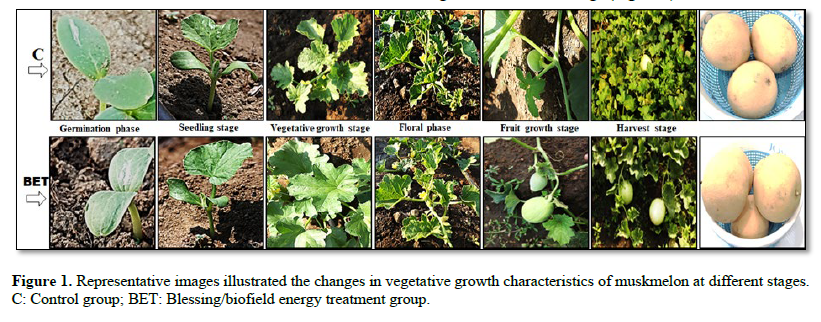
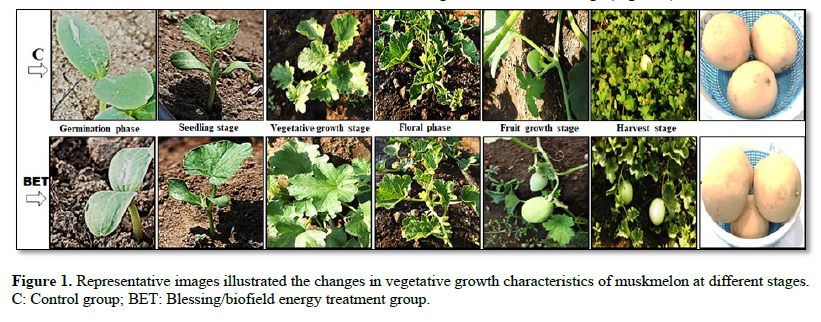
The morphological characteristics of muskmelon was documented through systematic observations at set intervals. This study tracked from the initial germination, seedling phase vegetative growth stage, floral phase, fruit growth stage, and final harvest stage (Figure 1).
Morphological attributes
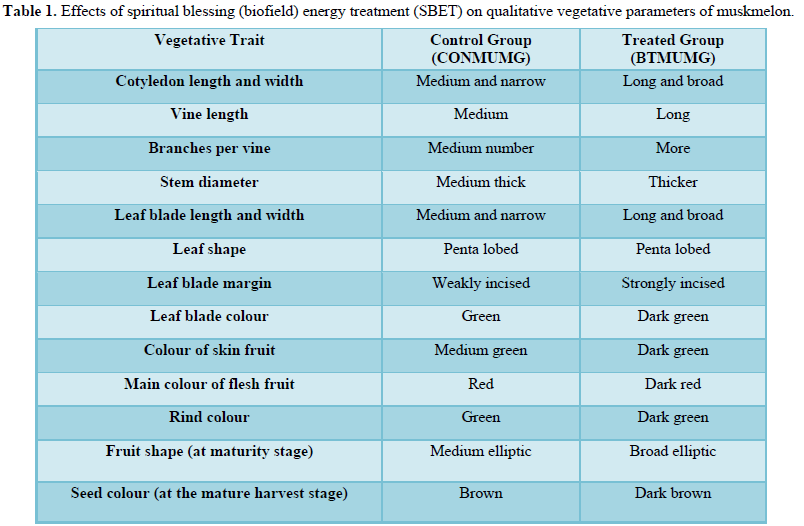
The morphological observations of the qualitative descriptors of muskmelon vegetative growth are presented in Table 1. The observed qualitative traits varied in cotyledon length and width, vine length, stem diameter, and leaf, fruit, and seed characteristics. The cotyledon length and width in the BTMUMG was longer and broader than CONMUMG, which was medium and narrow. Plant vine length was longer for the BTMUMG and medium vine length for the control group (CONMUMG). More numbers of branches per vine was observed in the BTMUMG, while medium in the CONMUMG. Thicker stem diameter was observed in the BTMUMG and the CONMUMG was medium. Medium and narrow leaf blade length and width were found in CONMUMG, and long and broad leaf blade observed for BTMUMG. Leaf blade margin was strongly incised in the BTMUMG and weekly incised in the CONMUMG. Green leaf blade colour was observed for CONMUMG, whereas dark green colour was found in BTMUMG. The colour of the muskmelon skin fruit was dark green in the BTMUMG group, and CONMUMG had medium green fruits. The flesh fruit colour was dark red in the BTMUMG and it was simple red in CONMUMG. Rind colour was dark green in the BTMUMG and green in colour in the CONMUMG. The fruits shape was medium elliptic in the CONMUMG, while broad elliptic in the BTMUMG. The CONMUMG group had brown seed colour, and the BTMUMG had dark brown seed colour. According to Table 1, many qualitative morphological traits in BTMUMG were significantly better than those in CONMUMG, indicating the superior quality of the treated muskmelon fruits.
Phenology and yield traits
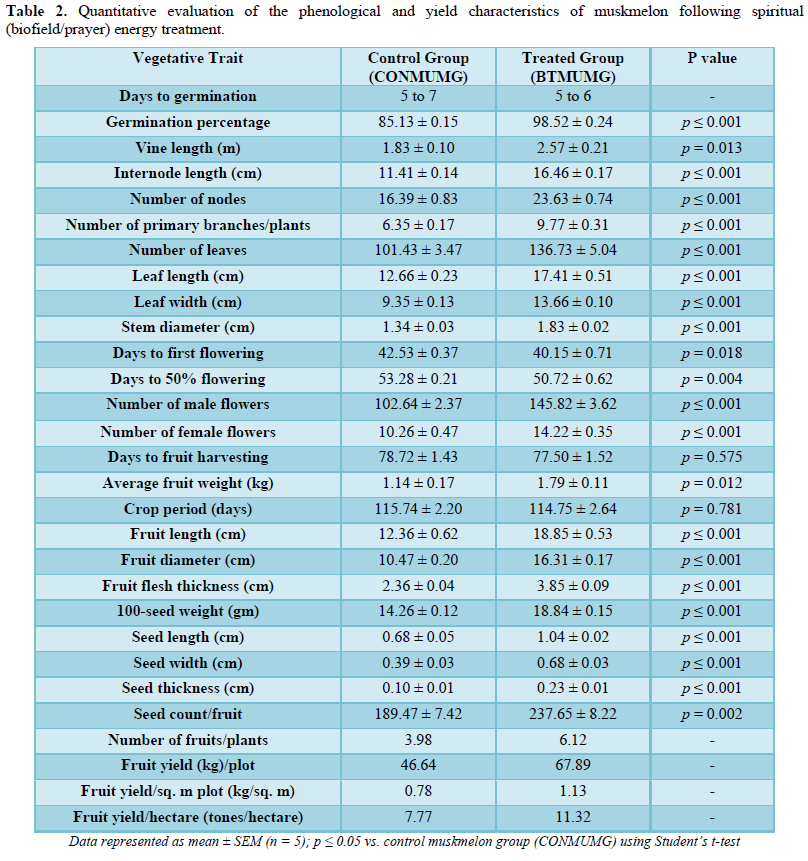
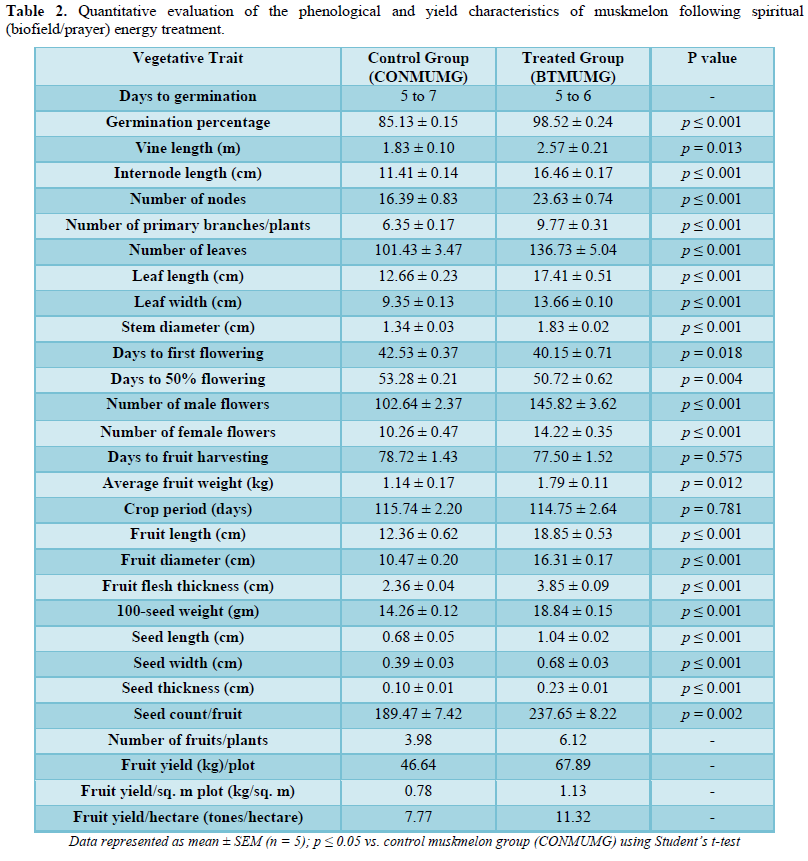
The rate of germination and plant vine length were increased significantly by 15.73% (p ≤ 0.001) and 40.44% (p = 0.013), respectively, in BTMUMG compared to the control, CONMUMG. Plant architecture such as number of nodes, internode length, and number of branches per plant were significantly increased by 44.17% (p ≤ 0.001), 44.26% (p ≤ 0.001), and 53.86% (p ≤ 0.001), respectively, in the BTMUMG compared to the control, CONMUMG. Parameters related to photosynthetic capacity such as the number of leaves, leaf length, and leaf width were rose by 34.80% (p ≤ 0.001), 37.52% (p ≤ 0.001) and 46.10% (p ≤ 0.001) in the BTMUMG than CONMUMG. Stem diameter was significantly increased by 36.57% (p ≤ 0.001) in the BTMUMG compared to CONMUMG. The BTMUMG took less time for first flowering (~2 days) and 50% flowering (~3 days) compared to the CONMUMG. Reproductive priming descriptors such as number of male and female flowers per plant were significantly increased in the BTMUMG by 42.07% (p ≤ 0.001) and 38.61% (p ≤ 0.001), respectively compared to the CONMUMG. The most striking impact of the treatment was observed in final yield metrics. The average fruit weight, fruit length, fruit diameter, and fruit flesh thickness were significantly increased by 57.02% (p = 0.012), 52.51% (p ≤ 0.001), 55.78% (p ≤ 0.001), and 63.14% (p ≤ 0.001), respectively, in the BTMUMG with respect to the CONMUMG. The weight of seeds (100 numbers), seed length, seed width, seed thickness, and seed count per fruit were significantly increased by 32.12% (p ≤ 0.001), 52.94% (p ≤ 0.001), 74.36% (p ≤ 0.001), 130% (p ≤ 0.001), and 25.43% (p = 0.002), respectively, in the BTMUMG with respect to the CONMUMG. Furthermore, in the BTMUMG fruits yield (tons per hectare) were rose by 45.69% compared to the CONMUMG (Table 2).
DISCUSSION
The results of this study clearly demonstrate that the Blessing Energy Treated muskmelon (BTMUMG) exhibited a robust physiological advantage over the control (CONMUMG) across all measured growth and developmental parameters. The significant enhancement in the germination rate and vegetative vigor, characterized by increase in vine length within the biofield energy-treated muskmelon, suggests a fundamental shift in the early developmental efficiency of the plant. Similar improvements in the morphological development of muskmelon seedlings, including substantial increases in plant height and seedling indices, have been documented through the application of biological agents, which optimize the physiological and biochemical status of the crop [9]. The remarkable modifications in plant architecture, specifically the increases in the number of nodes, internode length, and number of branching, indicate a robust expansion of the muskmelon’s structural framework. These traits are critical determinants of muskmelon productivity and are often targeted in breeding programs to improve light reception and nutrient partitioning across the plant canopy [10]. The expansion of photosynthetic capacity, evidenced by significantly higher leaf counts and increased leaf dimensions (length and width), suggests a more efficient source-to-sink relationship in the treated plants. Enhanced leaf area in muskmelons is known to directly correlate with improved carbohydrate metabolism and net photosynthesis, which are vital for the accumulation of soluble solids in the fruit [11].
Furthermore, an increase in stem diameter reflects an improved vascular system and structural integrity, likely supporting the increased biomass and nutrient transport required for accelerated growth. The physiological strengthening of the muskmelon vine through various agricultural interventions often results in thicker stems that better withstand environmental pressures and support higher fruit yields [9]. The reduction in time to first flowering (~2 days) and 50% flowering (~3 days) highlights an accelerated phenological transition, which was highly desirable for early crop maturation and market entry. Such changes in flowering phenology and vegetative growth parameters in muskmelon were frequently observed under optimized management practices or reduced environmental stress, ensuring a more stable and earlier reproductive phase [12]. These comprehensive improvements in growth, architecture, and phenology underscore the potential of Biofield Energy Treatment as a non-invasive tool for crop enhancement. Similar positive outcomes regarding plant height and branching have been reported by Branton et al. and Trivedi et al., 2026 [13, 14].
CONCLUSION
Data analysis indicated that the Trivedi Effect® (Blessing energy treatment) was a catalyst and bioenhancer for improved growth and yield characteristics in muskmelon (Cucumis melo). This research introduces SBET as a unique, non-invasive methodology for enhancing crop vigor without chemical inputs. However, further multi-location trials and molecular-level studies would help elucidate the underlying mechanisms and long-term sustainability of this energy-based approach in mainstream agriculture.
ABBREVIATIONS
SBET: spiritual blessing energy treatment; CONMUMG: control muskmelon group; BTMUMG: biofield energy-treated muskmelon group; SSP: single super phosphate; MOP: muriate of potash
ACKNOWLEDGEMENT
The authors are grateful to Divine Connection Foundation for the assistance and support during the work.
CONFLICT OF INTERESTS
Author MKT was employed by Trivedi Global, Inc. VDK, TBG, and NRP were employed by Shree Angarsiddha Shikshan Prasarak Mandal’s College of Agriculture, Sangulwadi, Mohitewadi, Maharashtra, India. Authors SM and SJ were employed by Trivedi Science Research Laboratory Pvt. Ltd.
FUNDING
The authors declare that no funds, grants, or other support were received during the preparation of this manuscript.-
Jahan N, Ahmed QM, Khatun MF, Islam MR, Hossain MG, Rahman S, Jahan N. Morphological diversity assessment of local muskmelon (Cucumis melo) germplasm in Bangladesh. Journal of Agricultural Sciences – Sri Lanka, 2024; 19(3): 439-451. https://doi.org/10.4038/jas.v19i3.10074
-
Garcia-Mas J, Benjak A, Sanseverino W, Bourgeois M, Mir G, González VM, Hénaff E, Câmara F, Cozzuto L, Lowy E, Alioto T, Capella-Gutiérrez S, Blanca J, Cañizares J, Ziarsolo P, Gonzalez-Ibeas D, Rodríguez-Moreno L, Droege M, Du L, Alvarez-Tejado M, Lorente-Galdos B, Melé M, Yang L, Weng Y, Navarro A, Marques-Bonet T, Aranda MA, Nuez F, Picó B, Gabaldón T, Roma G, Guigó R, Casacuberta JM, Arús P, Puigdomènech P. The genome of melon (Cucumis melo). Proceedings of the National Academy of Sciences of the United States of America, 2012; 109(29): 11872-7. https://doi.org/10.1073/pnas.1205415109
- Buczkowska H, Sałata A, Nurzyńska-Wierdak R. Melon (Cucumis melo) fruit yield under irrigation and mycorrhiza conditions. Agronomy, 2023; 13(6): 1559. https://doi.org/10.3390/agronomy13061559
- Roopa V, Syed S, Reddy PSS, Kadiri L. Effect of growth regulators on morphological parameters, phenology, yield attributes and yield of muskmelon under graded levels of moisture stress. International Journal of Current Microbiology and Applied Sciences, 2020; 9: 983-990. https://doi.org/10.20546/ijcmas.2020.911.117
- Trivedi MK, Branton A, Trivedi D, Mondal S, Jana S. Effect of consciousness energy healing treatment on the metal profile and properties of tellurium. Engineering Technology Open Access Journal, 2021; 3(5): 555623. https://doi.org/10.19080/ETOAJ.2021.03.555623
- Trivedi MK, Branton A, Trivedi D, Mondal S, Jana S. Evaluate the safety and efficacy of a biofield energy treated proprietary dietary supplement (TRI 360™) on psychological symptoms, mental disorders, emotional well-being, and quality of life in adult subjects. Alternative Therapies, Health and Medicine, 2023; 29(7): 104-113. PMID: 36074965.
- Aluko M, Ayodele OJ, Salami A. Growth and yield responses of muskmelon (Cucumis melo) to different planting seasons in Ado-Ekiti. International Journal of Agriculture, Environment and Bioresearch. 2020; 05(1): 85-98. https://doi.org/10.35410/IJAEB.2020.5462
- Richer-de-Forges AC, Arrouays D, Chen S, Dobarco MR, Libohova Z, Roudier P. et al. Hand-feel soil texture and particle-size distribution in central France. Relationships and implications. CATENA 2022; 213: 106155. https://doi.org/10.1016/j.catena.2022.106155
- Liu J, Lian H, Dou J, Li J, Zhu G, Wang J, Ma G, Li M. Physiological impact of Trichoderma viride agents on the quality and production of melon that is grown on soils continuously cropped to melon. Frontiers in Sustainable Food Systems, 2025; 9: 1513324. https://doi.org/10.3389/fsufs.2025.1513324
- Shahwar D, Khan Z, Park Y. Molecular marker-assisted mapping, candidate gene identification, and breeding in melon (Cucumis melo): a review. International Journal of Molecular Sciences, 2023; 24(20): 15490. https://doi.org/10.3390/ijms242015490
- Liu Y.-F, Qi H.-Y, Bai C.-M, Qi M.-F, Xu C.-Q, Hao J.-H, Li Y, Li T.-L. Grafting helps improve photosynthesis and carbohydrate metabolism in leaves of muskmelon. International Journal of Biological Sciences, 2011; 7(8): 1161-1170. https://doi.org/10.7150/ijbs.7.1161
- Nwokwu GN, Ekwu LG, Utobo EB. Effect of water stress at different phenological stages of muskmelon (Cucumis melo L). Indian Journal of Agricultural Research, 2018; 52(3): 268-272. https://doi.org/10.18805/ijare.a-312
- Branton A, Trivedi MK, Trivedi D, Phutankar NR, Gaikwad TB, Kadam VD, Mondal S, Jana S. Blessing (biofield) energy treatment (BET) for superior growth and yield of bitter gourd. International Journal of Agricultural Research and Review, 2026; 14(2): 20-26. https://doi.org/10.54978
- Trivedi D, Trivedi MK, Branton A, Phutankar NR, Kadam VD, Gaikwad TB, Mondal S, Jana S. Impact of blessing/biofield energy treatment (bet) on the vegetative growth, phenology, and yield of eggplant (Solanum melongena), International Journal of Plant Research, 2026; 14(1): 1-7. https://doi.org/10.5923/j.plant.20261401.01
-
 Table 1
 -
Table 2
QUICK LINKS
- SUBMIT MANUSCRIPT
- RECOMMEND THE JOURNAL
-
SUBSCRIBE FOR ALERTS
RELATED JOURNALS
- Journal of Microbiology and Microbial Infections (ISSN: 2689-7660)
- Proteomics and Bioinformatics (ISSN:2641-7561)
- Advances in Nanomedicine and Nanotechnology Research (ISSN: 2688-5476)
- Journal of Astronomy and Space Research
- Journal of Womens Health and Safety Research (ISSN:2577-1388)
- Journal of Biochemistry and Molecular Medicine (ISSN:2641-6948)
- Journal of Genomic Medicine and Pharmacogenomics (ISSN:2474-4670)